The $50K LinkedIn Recruiter Bill You Don't Have to Pay
TL;DR
LinkedIn Recruiter Corporate is commonly reported at $10,800 to $12,000 per seat per year in 2026 (LinkedIn does not publish pricing; figures come from agencies sharing quotes). Five seats put a US recruiting firm past $50,000 a year before add-ons; a ten-person team clears $100,000. Most firms do not need that many seats. They pay for full-network search because their own ATS search is too weak to find candidates they already have, so LinkedIn has quietly become their database. The alternative is to unbundle: keep one or two seats for genuine passive-candidate outreach, add a dedicated AI sourcing tool (Pin and Juicebox both list plans under $250 per user per month), and move daily search back onto an AI-native ATS that finds people by meaning. Fix the database, and the LinkedIn bill shrinks on its own.
A partner at an Atlanta search firm said something on a call with me recently that stuck: "LinkedIn Recruiter is gonna always remain being someone's biggest expense." He was not complaining about the product. He was resigned to the invoice, the way you are resigned to rent.
Another owner walked me through the routine his recruiters run all day: find the person in LinkedIn Recruiter, then switch into the ATS for the contact info and history. Two tools doing one job, on every search.
I have spent the past year talking with US staffing and search firm owners, and this line item comes up on nearly every call. So let's do what almost nobody does before renewal: look at what those seats actually cost, what you are really buying, and which parts you can now get elsewhere for a fraction of the price.
What does LinkedIn Recruiter actually cost?
LinkedIn does not publish Recruiter Corporate pricing; you get a quote from sales. But enough agencies share their numbers publicly that the range is well established:
- Recruiter Corporate: commonly reported at $10,800 to $12,000 per seat per year in 2026, often with a three-seat minimum. Multiple sources also report a roughly 15% price increase on 2026 renewals.
- Recruiter Lite: the one tier you can buy self-serve, widely reported at $170 per month billed monthly (about $1,680 per year on annual billing). It is capped at your third-degree network, 30 InMails a month, no team features, no ATS integrations. Workable for a solo desk, not an agency.
- The extras: InMail overages (reported around $10 per credit), Talent Insights (reported at $6,000 to $20,000 per year), promoted jobs. Several breakdowns put real total spend 20 to 40% above sticker.
Now the headline math. Five Corporate seats at the commonly reported $10,800 is $54,000 a year. Ten seats is $108,000. For many firms I talk to, that is the biggest software line on the P&L, bigger than the ATS, the phone system, and the job boards combined. We show where it sits in the full picture in our recruitment tech stack cost guide.
One market signal tells you how big this line item is: everyone is trying to eat it. Outreach tools keep adding sourcing databases, and new AI sourcing startups launch constantly. Vendors do not pile into a category unless the incumbent's price has left room for an entire industry underneath it.
What are you actually paying for?
Strip the packaging away and a Recruiter Corporate seat buys three things.
- Profile access. Visibility beyond your third-degree network, across LinkedIn's full member base. This is the genuinely scarce asset. Nobody else has this network.
- Search filters. Forty-plus filters, Boolean strings, saved searches, projects. Useful, but mechanically this is keyword-era search. You still translate "someone who has scaled a fintech sales team" into title and keyword guesses.
- InMail credits. Around 150 pooled credits per seat per month, for reaching people whose email you do not have. Plenty of recruiters tell me email and phone now out-reply InMail.
The question that changes the renewal conversation: how much of your team's time in Recruiter goes to the scarce part (finding people nobody has), and how much to the replaceable parts (re-finding, filtering, and messaging people already in your own system)?
Why has LinkedIn become your database?
When I ask recruiters why they open LinkedIn before their own ATS, the answer is rarely "LinkedIn has better candidates." It is "our system can't find anyone." Years of placements, interviews, and notes sit in the database, keyword search returns nothing useful, so recruiters go where search works.
That is the uncomfortable diagnosis: agencies over-rely on LinkedIn Recruiter because their ATS search is so bad that LinkedIn has become their database. You are paying a reported $10,000-plus per seat, per year, partly to re-find people you already know.
This is the same failure we dissect in why your ATS is a candidate graveyard: the data is there, but stored in a shape keyword search cannot think in. Meaning-based search flips that. When your ATS can answer "who do we know that could run enterprise sales for a payments company?" from your own notes, CVs, and call history, the daily two-step collapses into one. If you want the mechanics, here is how meaning-based search works, in plain English.
Fix the database and the LinkedIn bill shrinks on its own, because most searches never needed the whole network. They needed yours.
Can you unbundle the Recruiter seat?
Yes, and the pieces are more mature than most owners realize. The unbundled stack has three parts:
- A browser extension for profile capture. When a recruiter does find someone on LinkedIn, one click imports the profile into the ATS, with enrichment filling in contact details. No re-keying, and the candidate is findable forever in your own system.
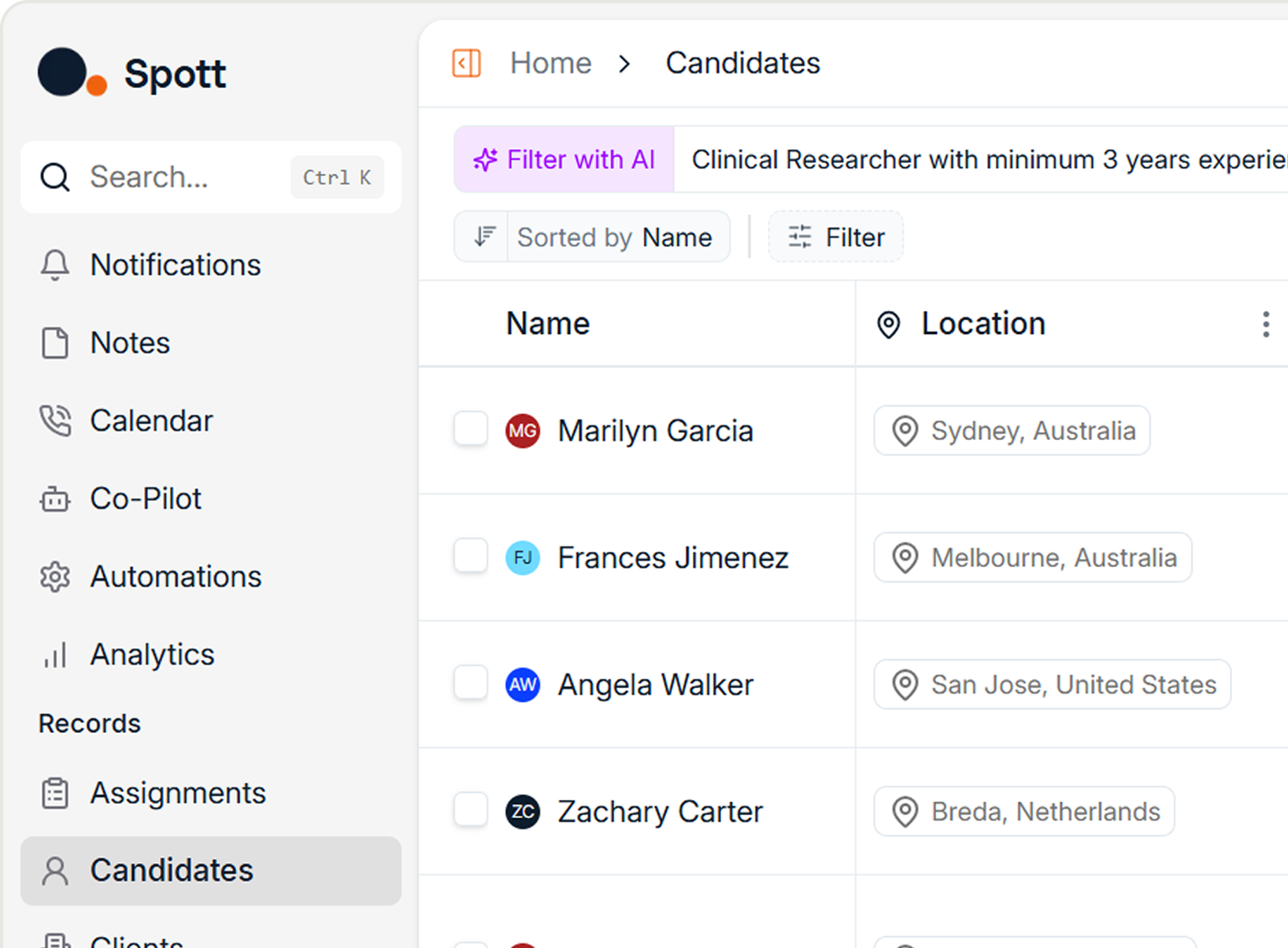
- An AI-native ATS with meaning-based search and matching. The core move. Every search that used to start in LinkedIn now starts in your own database, where AI matching ranks the people you already know against the role, using notes and history LinkedIn will never have. Here is how AI finds your best candidates in practice.
- A dedicated AI sourcing tool for net-new candidates. Two real examples: Pin (pin.com) searches a claimed 850M+ profiles in natural language, runs outreach, and lists plans from $99 to $249 per user per month on annual billing. Juicebox (juicebox.ai, formerly PeopleGPT) claims 800M+ profiles from dozens of data sources, with listed plans at $139 and $199 per seat per month, a custom Business tier, and paid agent add-ons. Both aggregate public web data instead of living inside LinkedIn's walls.
Here is what that looks like for a five-recruiter team, using reported and listed prices:
| Line item | All-LinkedIn stack | Unbundled stack |
|---|---|---|
| Recruiter Corporate seats | 5 seats, ~$54,000/yr (reported ~$10,800/seat) | 1 to 2 seats, ~$10,800 to $21,600/yr |
| AI sourcing tool (Pin or Juicebox) | Not included | 5 users, ~$8,000 to $15,000/yr (list prices) |
| Profile capture into your ATS | Manual re-keying | Included with a modern ATS extension |
| Searching your own database | Keyword search (why you bought seats) | Meaning-based search, included in an AI-native ATS |
| Indicative annual total | ~$54,000+ | ~$19,000 to $37,000 |
You pay for an ATS in both columns, so it is left out of the totals. Even at the conservative end, the unbundled stack takes roughly a third off the sourcing line; at the lean end, it cuts the line by close to two thirds. Many agencies land at one or two Corporate seats for the whole firm, shared by the people doing true passive-candidate headhunting.
What does LinkedIn Recruiter still do best?
Let me be straight, because the case for right-sizing falls apart if you pretend LinkedIn is worthless. It is not.
- The network itself. Over a billion members, with employment data candidates update themselves. No aggregator fully matches its passive-candidate coverage, especially in senior and niche markets.
- Recency. People update LinkedIn when they change jobs. Scraped databases lag.
- InMail as a last resort. When you have no email and no phone number, InMail still gets through.
The argument is not zero seats. It is matching seat count to the work that genuinely needs the full network, instead of defaulting to one seat per recruiter because that is how it has always been bought.
For a wider look at sourcing tools worth trialing, see our roundup of the best AI recruiting tools in 2026.
How do you right-size the bill?
A practical sequence I have watched firms run before renewal:
- Audit a month of Recruiter searches. Tag each one: was the person you hired or shortlisted already in your ATS? Firms are routinely shocked by how often the answer is yes.
- Fix your own database first. Move to an ATS where search and matching actually work, and make the database the team's default first click. This is what makes seat cuts safe instead of painful.
- Add a sourcing tool for net-new work. Trial Pin, Juicebox, or a similar tool against live roles for a month and compare shortlist quality with Recruiter on the same searches.
- Cut seats at renewal, not mid-contract. Drop to one or two shared Corporate seats, and negotiate. Reported renewal hikes are exactly why this analysis belongs before the auto-renewal date, not after.
The bottom line
LinkedIn Recruiter earned its price when it was the only place candidate data lived and the only search that worked. Neither is true anymore. The network is still worth paying for. Paying $50,000 a year to compensate for a database that cannot find its own candidates is not.
Make your own database searchable first, then let the seat count follow. Book a Spott demo and bring a role you recently filled through LinkedIn. We will show you how many of the candidates you paid to re-find were already yours.

Frequently Asked
LinkedIn does not publish Corporate pricing. Agencies sharing their quotes report roughly $10,800 to $12,000 per seat per year, often with a three-seat minimum, and a roughly 15% increase reported on 2026 renewals. Recruiter Lite is widely reported at $170 per month.
Usually not. Lite limits you to your third-degree network, around 30 InMails a month, and no team collaboration or ATS integrations. It fits a solo recruiter with a strong existing network, not a multi-desk agency.
No single tool replaces it one-for-one. The working pattern is a stack: an AI-native ATS with meaning-based search for candidates you already know, a sourcing tool like Pin or Juicebox for net-new candidates, and one or two retained Recruiter seats for outreach that needs LinkedIn's network.
Most should not. LinkedIn's network coverage and data recency are real, especially for senior and passive candidates. The saving comes from cutting to one or two shared seats, not from going to zero.
Because keyword search in most ATS platforms cannot surface the right people, even when they are in the database. Once the ATS searches by meaning across profiles, notes, and history, most daily searches move back in-house.

Outp(l)ace everyone.
You can’t win tomorrow’s placements
with yesterday’s tools.