Spott vs TrackerRMS
In depth review
Discover the ideal ATS/CRM solution for your business as we
compare the top contenders for you in our head-to-head series
Last reviewed: July 2026
TrackerRMS, now marketed simply as Tracker, is the same product under two names: a mid-market ATS/CRM that has run temp and contract staffing agencies since 2005. It grew up on both sides of the Atlantic, with a US base in Knoxville and a UK entity, and more than 1,000 agencies run on it. It covers a lot of ground: candidate management, invoicing, timesheets, shift scheduling, a client portal, and job distribution across 1,000+ boards through partners like LogicMelon and Daxtra. One system from sourcing to payroll.
The last eighteen months have been busy. An open REST API went GA in February 2026, the back office expanded, and TrackerAI keeps growing. Tracker's marketing now calls the platform "AI-native."
That word is doing a lot of work. Tracker's intelligence is a content layer, generated emails, job posts, summaries and ranking scores, added onto a 2005 architecture, with the conversational agent EVA still labelled "beta" more than a year after its announcement. Spott is AI-native in the architectural sense: the matching engine, the note-taker, enrichment and multi-channel outreach aren't bolted-on modules, they're what the product is made of, and every plan gets them.
Below, the full picture on both: pricing, search, AI, outreach, back office, reporting, support, compliance, and what a switch involves.
Breadth on a 2005 chassis vs an AI-native platform
Tracker's approach: cover the whole staffing workflow in one system. ATS, CRM, invoicing, timesheets, shift management, compliance, and a client portal, with AI content tools layered on top and a partner bench filling the gaps: Daxtra for parsing and semantic search, VoIP vendors for calls, marketplace startups for screening and note-taking.
Spott's approach: the intelligence is the foundation, not a layer. A single semantic index sits under matching, which reasons over CVs, notes, call transcripts and attachments at once. The note-taker logs its own structured records, enrichment tops up a profile when a recruiter asks, and mail, calendar and WhatsApp all land on the candidate they belong to. Nothing here waits for a higher tier.
Every section below asks the same question a different way: assemble it, or have it included.
At a glance
| Category | Spott | TrackerRMS |
| ATS/CRM core | One AI-native ATS + CRM for perm, exec and contract desks; built this decade, built to scale | Broad ATS/CRM with full back office, on 2005 architecture |
| Sourcing & data quality | Duplicates stopped at the door; re-uploaded CVs refresh the record on their own; enrichment on request | Daxtra parsing, Capture browser extension (Core+); no native enrichment |
| Search & matching | Search on meaning rather than keyword overlap; CVs, notes, transcripts and attachments, all plans | Keyword search, 80+ filters, semantic dictionaries; AI ranking scores by overlap |
| Communication | Mail, calendar and WhatsApp land on the candidate record by themselves; campaigns built in | Email + e-shots; AI-generated sequences and advanced automation on Professional+ |
| Meeting intelligence | AI note-taker included; it writes the summary back to the record for you | None native; VoIP partners (CloudCall, RingCentral, Ringover) or note-taker add-ons |
| Client portal & back office | Candidate presentations with the CV reformatted for you, and a company portal; back office not native | Full client portal, invoicing, timesheets, payroll, shift management |
| Analytics & reporting | Analytics on every plan; nothing held back for a higher tier | Report builder; base views Core, full custom reporting Professional+ |
| Integrations & API | Native channels and Broadbean job boards built in; open API included | REST API on Professional+, unlimited API Enterprise-only; 1,000+ job boards |
| Data compliance | EU hosting by default, ISO 27001 certified; models never train on your data | GDPR/CCPA tooling and EU/UK data commitments; no published ISO 27001 or SOC 2 |
| Pricing | $199/user · All-in-one platform | Launch $79 / Core $99; Professional & Enterprise by quote |
What does TrackerRMS cost?
Tracker is more transparent on price than most of this market, with one caveat. Four tiers: Launch at $79 per user per month, billed monthly, capped at five recruiters, USD and GBP only, and sold through Tracker's distribution partner LogicMelon rather than Tracker itself. Core is $99 per user per month. Professional and Enterprise are quote-only, with a six-month minimum commitment. One oddity to know before you call: Tracker's own pricing FAQ still says pricing "starts at $95," a scroll below a plan card that reads $79.
The plan grid rewards a close read. Core now covers the basics properly: placement workflow automation, base custom reporting, invoicing, e-signature, the client portal, and the AI Content Suite. The capabilities the marketing leads with sit higher up. Advanced automation (AutoAction, Watchdogs), full custom reporting with scheduled reports and live Excel/Power BI export, multichannel sequences, timesheets, candidate compliance, and the REST API all require Professional. Full back office, payroll, shift management with geo-fencing, and unlimited API access are Enterprise-only.
Onboarding comes as fixed-price packages with data migration included, and Tracker never bills migration hourly. Per Tracker's implementation page, extracting data from your legacy system is your responsibility, direct flat-file imports cost $250 per file, and bulk resume parsing runs $100 per 1,000 resumes. No implementation timeline is published.
Spott keeps it to two numbers. Core is $139. Pro is $199. Per user, per month, on an annual agreement. Semantic matching, the note-taker, multi-channel campaigns and AI-built client presentations come with the base plan, because they are how the product works rather than options on it. Enrichment credits are the only metered cost. The whole picture is on the pricing page.
Bottom line: Tracker's entry price gets you in the door cheap. The Tracker in the marketing lives on the quote-only tiers. With Spott, the price on the page is the platform.
Sourcing, search and matching
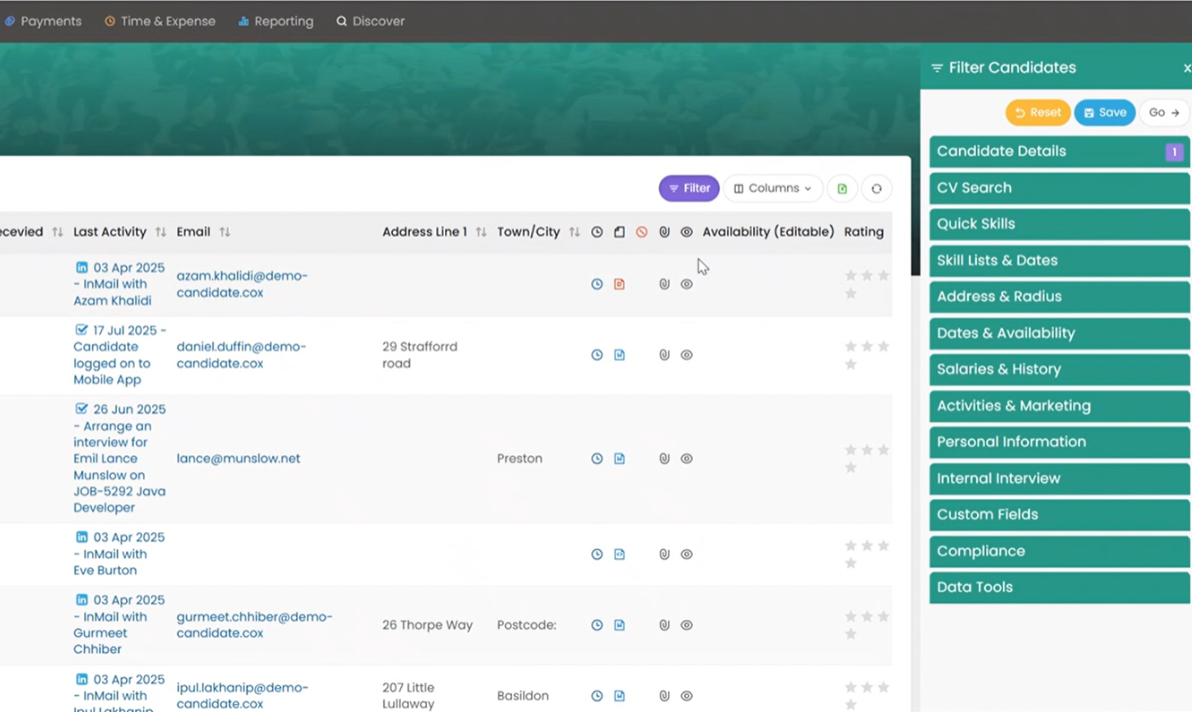
Tracker searches on keywords: 80+ filterable criteria, geographic radius, and semantic dictionaries so "HR" also returns "Human Resources." Saved views update in real time, and the AI ranking engine, included on every plan, scores candidates by skills overlap, past role success and recruiter feedback. When you know the exact terms, it is quick and predictable. The deeper semantic search and match capability is rented from Daxtra rather than built into the core.
Exploratory searches show the limit. The engine counts matches without weighing them, so a candidate who mentioned "project management" once in a note can rank beside someone who ran a PMO for five years.
Spott reads for meaning on every plan. Type "contract recruiter who has run MSP accounts" and search and matching reason over the CV, the call transcripts, the attachments and the notes at once, then rank each candidate with the why attached. You don't have to guess the tags someone used. A line a colleague dropped in a note in January still surfaces the right person in June.
Bottom line: Tracker counts keyword matches and rents its semantic layer from Daxtra. Spott reads the whole record and explains the answer.
AI and automation: TrackerAI, EVA, and the partner bench
Tracker's AI program is real. TrackerAI covers job-description generation, resume and candidate summarization, candidate ranking, interview prep ("CompAIr"), screening questions, branded resume reformatting, and AI-written outreach. AI-generated sequences arrived in late 2025 and the open API went GA in February 2026.
Look closer and the pattern repeats. The AI Content Suite starts at Core; sequences and advanced automation start at Professional. EVA, the conversational agent announced in March 2025 as the platform's future, still carries a "beta" label on Tracker's own AI page more than a year later. And the heaviest lifting, transcription, screening, semantic search and note-taking, belongs to partners, each one a separate vendor and a separate bill.
In Spott, the loop is closed and nothing is gated. The note-taker joins the call and files a structured record where it belongs. Enrichment tops up a profile on request, spending credits only when you run it. Matching, AI suggestions and outreach all read from that one database, and the base plan gets the same engine as the top one.
Bottom line: Tracker's AI writes content and scores lists, with the flagship agent in beta and the depth partnered out. Spott's AI runs the workflow.
Communication and outreach
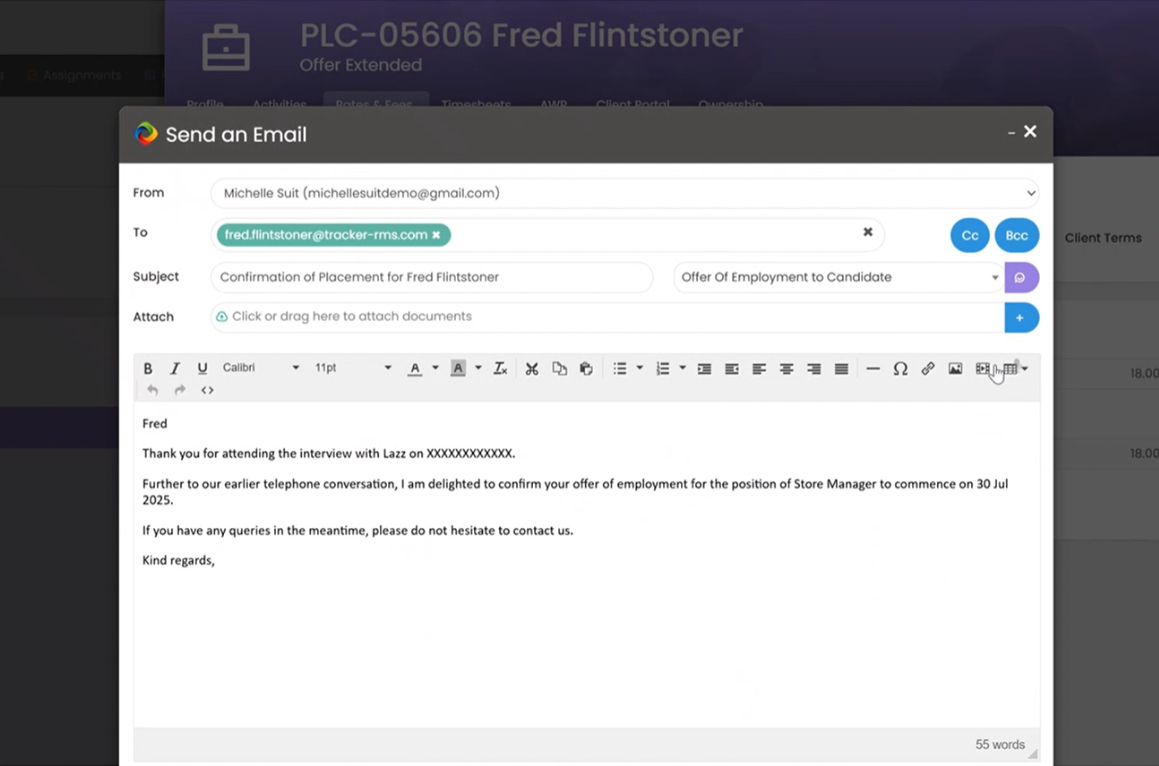
Tracker covers email: templates, merge fields, bulk sending, and a built-in e-shot marketing tool with open and click tracking. Job distribution is broad, posting to 1,000+ boards through LogicMelon, Daxtra, idibu and Jobmate, which is exactly what volume staffing firms buy it for.
The gaps are channel and tier. WhatsApp and SMS arrive through integrations (TextUs, WhatsApp Business), not the platform. Multichannel nurture sequences, and the automation that makes outreach run itself, start at Professional. The new AI-generated sequences inherit the same gate.
Spott treats channels as table stakes. Mail, calendar and WhatsApp sync to each record; a reply lands on the candidate whichever channel it arrives on, and campaigns sequence across them with AI personalization, on every plan. Job boards run through the Broadbean integration.
Bottom line: on job-board reach Tracker is ahead. On reaching candidates, Spott runs the channels Tracker leaves to integrations, with no Professional upgrade in the way.
Meeting intelligence
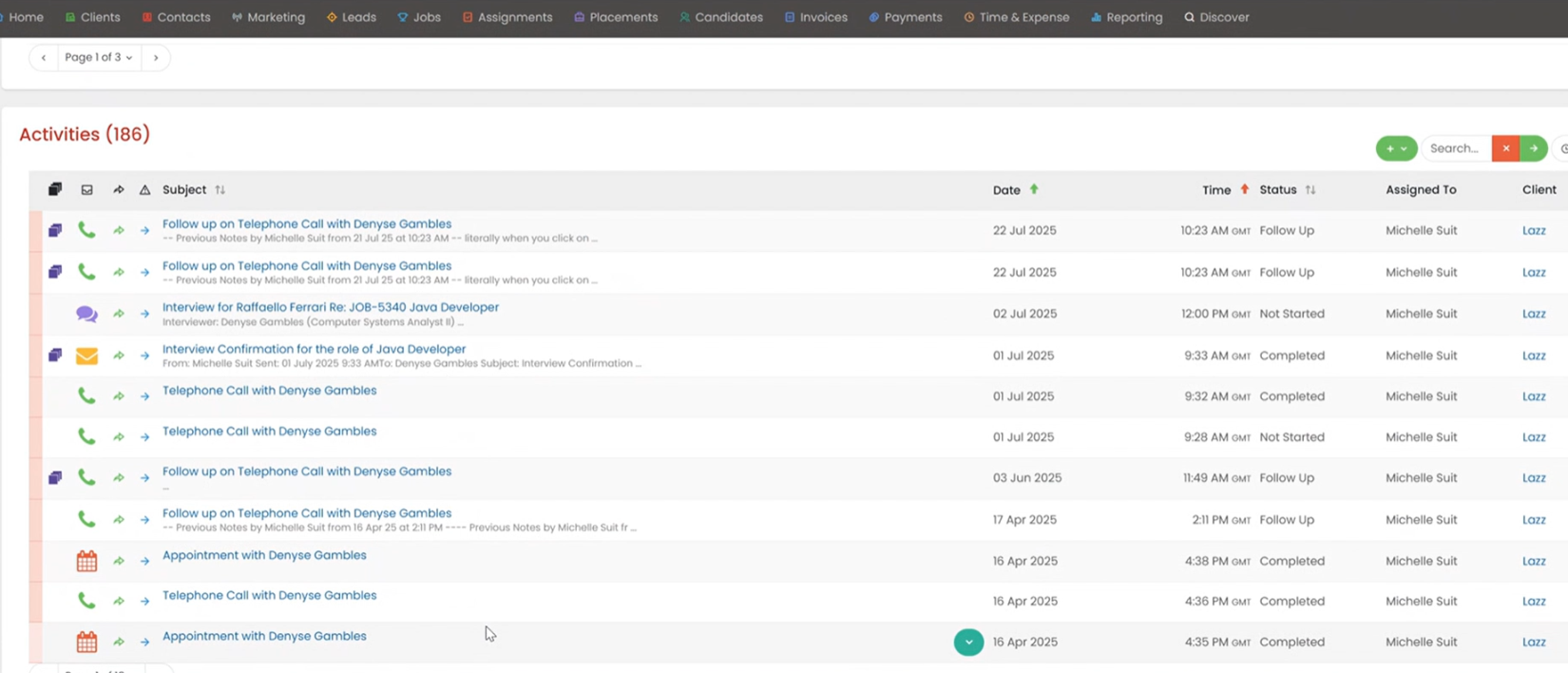
Tracker has no native call transcription or note-taker. Recording, transcription and AI summaries require a third-party VoIP integration, CloudCall, RingCentral or Ringover, each with its own subscription and its own data silo. Marketplace options like CoRecruit (formerly Quil) and SourceWhale add recruiting note-takers that write back to Tracker records, which narrows the gap while adding another vendor. Left to itself, the platform can log that a call happened. It cannot tell you what was said.
Spott's note-taker joins online meetings, captures the conversation, and files it against the right candidate and client records, searchable by the whole team. No extra subscription, no silo.
Bottom line: in Tracker, meeting intelligence is a procurement project. In Spott it is a feature.
Client portal, invoicing and back office
This is the ground Tracker was built for.
Tracker's client portal lets clients log into a branded environment, review candidates, leave feedback and request interviews, with per-project visibility controls and a real-time view of the pipeline. The back office goes deeper: invoices raised straight from the job record, automatic fee and margin calculation, timesheets, shift planning with mobile geo-fencing, payroll integrations (QuickBooks, Xero, Sage), and compliance tracking. For agencies billing hourly, that consolidation is the reason to buy Tracker. The caveat is the ladder: timesheets need Professional, and full back office plus shift management need Enterprise.
Spott delivers the client work through candidate presentations and a company portal for shortlists and feedback. The design centres on the deliverable, leaving the recruiter in charge of how each candidate is framed. Spott is not a back office; agencies that need native invoicing, timesheets or shift management run it alongside a dedicated tool.
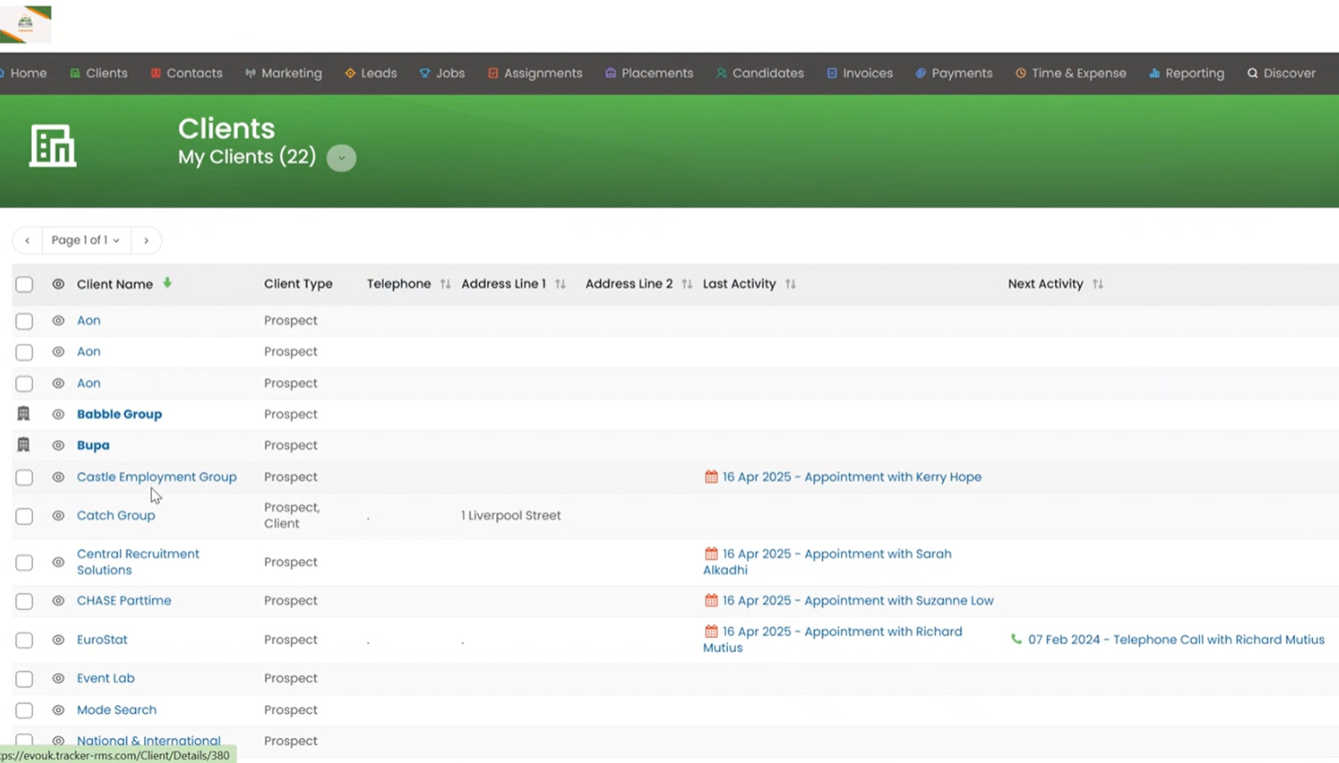
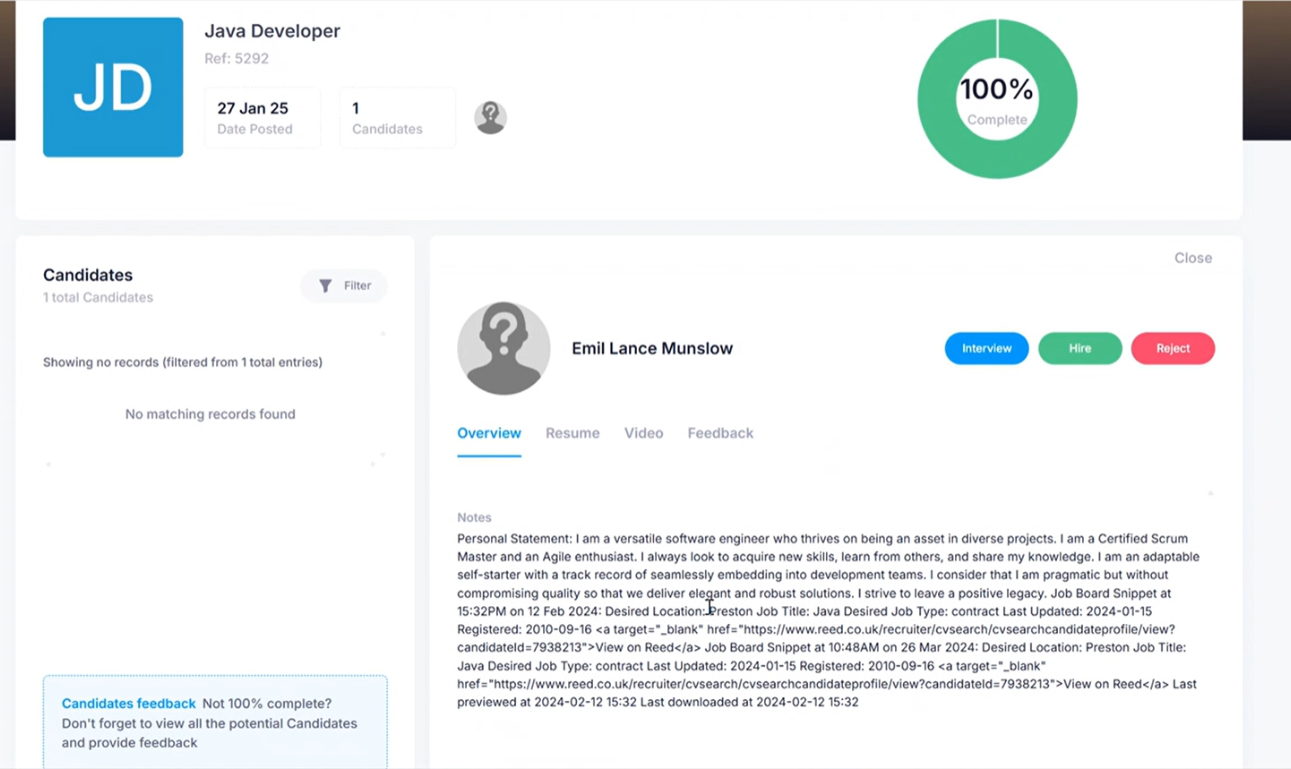
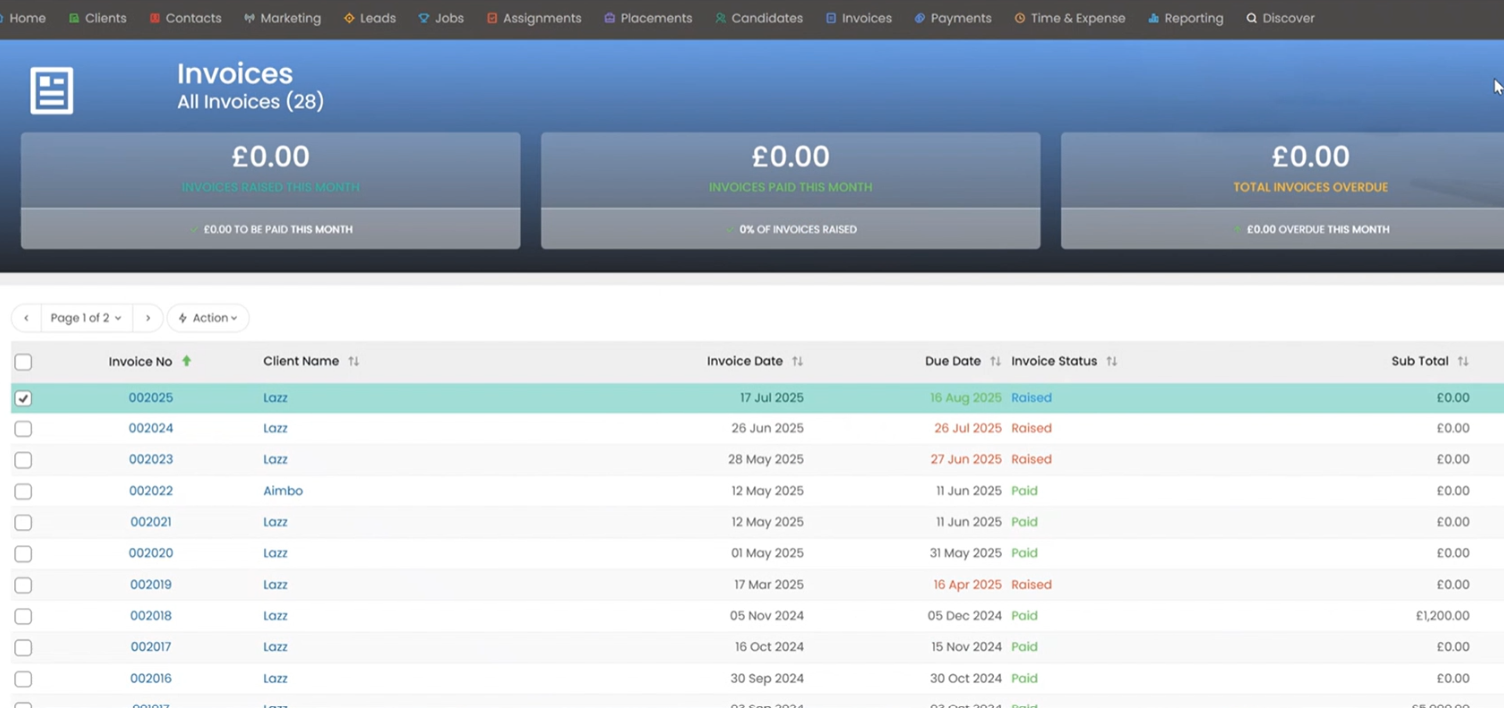
Bottom line: for shift-based staffing with heavy client collaboration, Tracker's portal and back office cover ground search-focused tools don't. For search, perm and exec work, that machinery is weight you may not need.
Reporting and analytics
Tracker's report builder reaches every field in the system, with pre-built templates and exportable dashboards. Base data views ship with Core, but full custom reporting, scheduled reports, and live Excel/Power BI export need Professional. Building your own BI layer on top depends on the REST API, which is also a Professional feature, with unlimited access reserved for Enterprise.
Spott puts recruiting analytics on every plan, no tier gate: placement volume, time-to-fill, where your best candidates came from, how the team is tracking, all shaped for recruiters and legible without an analyst on call.
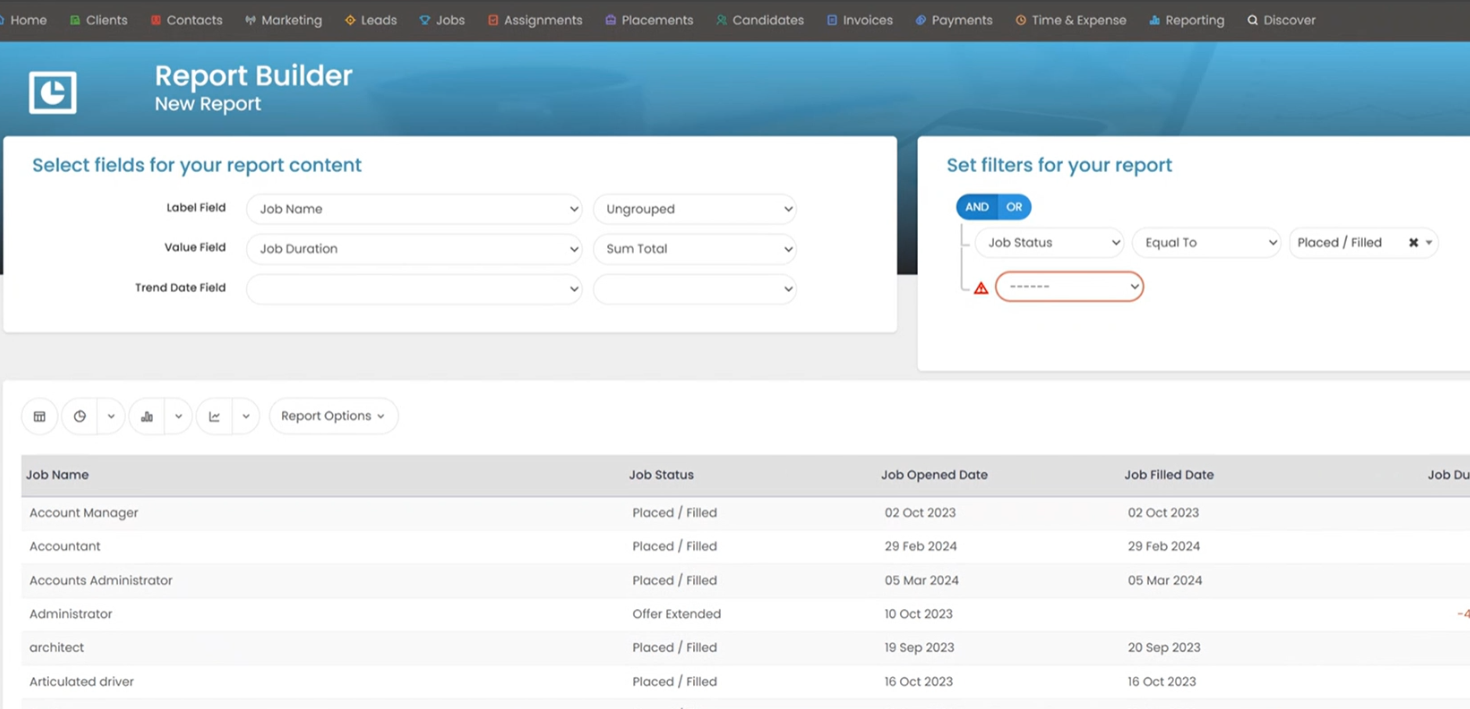
Bottom line: Tracker's reporting is capable for teams that climb both the learning curve and the plan ladder. Spott's analytics come standard.
Customer support and vendor experience
Support is the card Tracker leads with, and it invests there: onshore teams, live chat and email on every plan, with priority support and dedicated success managers on Professional and Enterprise. If support responsiveness is your first filter, test it with current references at your plan tier and in your region, because the level you get is tiered.
Spott keeps support next to the product team, so a question reaches someone who can ship the fix.
Bottom line: Tracker leads with support; confirm what your tier includes. At Spott the answer comes from the people shipping the product.
European data compliance
Tracker ships GDPR and CCPA tooling, including an erasure-request portal, DPA documentation and cookie compliance, and commits in its privacy policy that EU and UK personal data will not be processed outside Europe, the UK or adequate jurisdictions without transfer safeguards, anchored by its UK entity. What is missing is certification: no ISO 27001 or SOC 2 appears anywhere on the current site. A first Head of Information Security and Compliance was appointed in November 2025, which suggests certifications are on the way. They are not here yet.
Spott starts from the certificate. It's an EU company, EU-hosted by default and ISO 27001 certified, with GDPR wired into the workflows and an AI stack that runs on enterprise licenses your data never trains. It's all set out in the Trust Center.
Bottom line: Tracker makes GDPR commitments; Spott carries the certification. When a client's security questionnaire lands, that difference is concrete.
Switching from TrackerRMS: what it takes
Agencies choose Tracker for the back office and the client portal, and those reasons hold up. The rethink tends to arrive with the renewal notice: the features in the marketing turned out to live two tiers up, the AI roadmap's centerpiece is still in beta, or the stack of bolt-on vendors has quietly grown.
The move itself takes roughly four weeks, handled by Spott's in-house migrations team. Because the migration keeps your data model as it is, candidates, clients, jobs, placements, notes and activity history all carry over with next to nothing lost. Macmillan Davies is the reference point: signed in November 2025, 280,000 records migrated and deduplicated, live by January 2026. One planning note wherever you land: pulling your data out of Tracker is contractually on you, so line up those exports ahead of your renewal date.
Where TrackerRMS is still a good choice
Tracker serves a clear market, and for some firms it remains the sensible call:
- You run a temp, contract, or shift-based staffing agency. Invoicing, timesheets, payroll integrations, shift management and compliance tracking inside the ATS is Tracker's core case, and it keeps investing there.
- Your clients work inside the portal. Candidate review, feedback and interview requests in a branded portal with per-project controls is a differentiator.
- Support responsiveness is your first filter. Onshore support on every plan, which Tracker leads its marketing with.
- You post to job boards at volume. Distribution across 1,000+ boards via LogicMelon, Daxtra, idibu and Jobmate.
Where Spott wins
- The AI ships with the base plan. Matching, note-taking, enrichment and campaigns are standard from Core up, with no Launch-to-Enterprise climb and no beta asterisk on the flagship.
- Search that reasons over the whole record. Meaning-based matching over CVs, notes, transcripts and attachments, with the reasoning shown on each result.
- The partner bench, already inside. Transcription, enrichment and sequencing are native, so there's no VoIP contract, note-taker vendor or screening startup left to procure.
- WhatsApp alongside mail and calendar. Two-way, tied to the candidate record, on every plan.
- A database that stays clean. Duplicates blocked on entry, CVs that refresh the record on re-upload, enrichment you run on demand.
- A certificate, not a promise. ISO 27001, EU hosting by default, and an AI supply chain that never trains on your data.
What are the best TrackerRMS alternatives?
It depends on what you're optimizing for. Agencies that want the AI built in rather than tiered and partnered look at Spott first. Among the incumbents, Bullhorn and Vincere are the temp-and-enterprise comparisons worth reading, while Loxo, Recruit CRM and Crelate chase the same mid-market Tracker serves. The full field is in our top 10 ATS and CRM platforms for 2026.
Bottom line
TrackerRMS is twenty years of staffing software built broad: a client portal, a real back office, onshore support, and a company still shipping, from the open API to the expanded back office.
The trade-offs point one way. The marquee features sit on quote-only tiers. The flagship AI agent has been in beta since March 2025. Meeting intelligence and semantic search belong to partners. Security certification is a promise rather than a certificate, and search still counts keywords. None of these is disqualifying on its own. Together, they mean you assemble Tracker, plan by plan and vendor by vendor, on a foundation poured in 2005.
Spott starts from the opposite premise. The price on the page is the platform, the AI is the architecture rather than the add-on, and every call, note and reply your team logs makes the database sharper. Over the life of an ATS contract, that gap widens.
Ready to compare for real? Book a demo and we'll show you the workflow with nothing gated and nothing in beta.

A full side-by-side breakdown for most platforms we get compared to.





Frequently Asked
Yes. Tracker is the current brand name for TrackerRMS; it's one platform, one company. Most buyers still search "TrackerRMS," which is why the name persists.
Four tiers: Launch at $79 per user per month (up to five recruiters, billed monthly, sold via partner LogicMelon), Core at $99 per user per month, and Professional and Enterprise by quote, with a six-month minimum. Advanced automation, sequences, full custom reporting, timesheets and API access need Professional or above; full back office and shift management are Enterprise. Direct flat-file imports cost $250 per file and bulk resume parsing $100 per 1,000 resumes; the rest of the migration is bundled into fixed-price onboarding packages.
Yes. TrackerAI includes job-description generation, resume summarization, candidate ranking, interview prep, screening questions and AI-written outreach, with AI-generated sequences added in late 2025. The conversational agent EVA, announced in March 2025, remains in beta. AI candidate ranking ships on every plan; the AI Content Suite starts at Core. Call transcription, AI screening and semantic search run through partners.
Not in the semantic sense. Tracker matches on keywords and filters, with an AI ranking engine scoring by skills overlap and past activity, and semantic search available through its Daxtra integration. There is no meaning-based search across the whole record. Spott matches across everything the database holds, including notes, transcripts and attachments, and shows the reasoning behind each result.
Not natively. Recording, transcription and AI summaries require a third-party VoIP integration (CloudCall, RingCentral, Ringover) or a note-taker integration such as CoRecruit or SourceWhale, each its own subscription. Spott's note-taker is native: it joins meetings and files structured notes to the right records, on every plan.
Tracker provides GDPR and CCPA tooling (an erasure-request portal, DPA, cookie compliance) and commits in its privacy policy that EU and UK data will not be processed outside Europe, the UK or adequate jurisdictions without safeguards. No ISO 27001 or SOC 2 certification is published on the current site; a first Head of Information Security and Compliance was appointed in November 2025. Spott is ISO 27001 certified and EU-hosted by default.
It can run perm workflows, but the platform's depth, in timesheets, shifts, payroll and compliance, was built for temp and contract staffing. Search firms and exec recruiters tend to hit the limits of keyword search and document-style candidate presentation; that profile is better served by semantic matching and branded presentation workflows.
About four weeks, handled by Spott's in-house migrations team. Spott mirrors your existing data model, so candidates, clients, jobs, placements, notes and activity history transfer with virtually zero loss. Macmillan Davies went from signature to live in under four weeks, including deduplication of 280,000 candidate records. Extracting your data from Tracker is contractually your responsibility, so request exports well before your renewal date.

Outp(l)ace everyone.
You can’t win tomorrow’s placements
with yesterday’s tools.