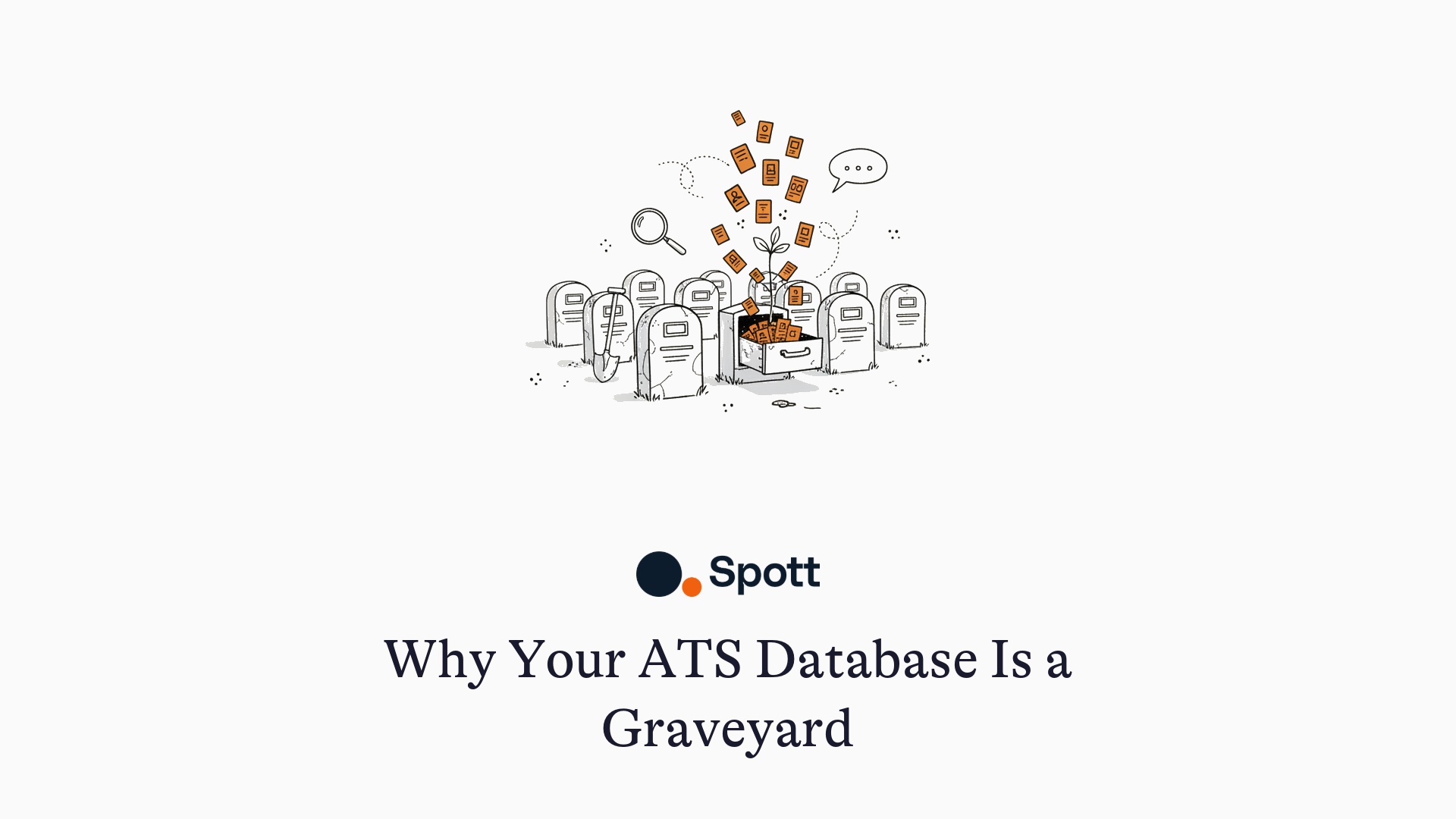
Why Your ATS Database Is a Graveyard (And How to Bring It Back to Life)
TL;DR
Most recruiting firms own a candidate database they cannot effectively search. Legacy ATS platforms store candidates in rows and columns, so keyword search only finds what someone specifically tagged years ago. The result: recruiters skip their own database and pay LinkedIn Recruiter to re-find people they already know. The fix is not more sourcing licenses. It is making your existing candidate database searchable by meaning (so "account executive" also surfaces the "VP Sales" who does the same job), refreshing stale profiles automatically, capturing context from every call and note going forward, and re-engaging candidates on triggers like job changes. Firms that do this turn their oldest asset back into their cheapest source of placements.
In my conversations with US staffing and search firm owners over the past year, one confession comes up in almost every call. They have a big database. Tens of thousands of candidates, sometimes hundreds of thousands, built over a decade or more. And nobody searches it.
A recruiter with more than 20 years in the business put it plainly: "I forget about people. I always go straight to LinkedIn." The owner of a 30-plus recruiter professional staffing firm, seven years into a legacy ATS, told me nobody on his team can find candidates in their own system.
Think about what that means. These firms have already sourced, screened, and often placed these people. Every one of those records cost real recruiter hours to create. And the system holding them has quietly become a graveyard: candidates go in, and nothing comes back out.
This guide covers why that happens, what it actually costs, and how to bring a dead candidate database back to life.
Why can't recruiters find candidates in their own ATS?
Because a traditional ATS is built on a relational database, and relational databases can only find what you explicitly told them.
A relational database stores candidates in rows and columns: name in one field, title in another, skills in a tags field somebody filled in (or didn't) years ago. Search works by matching exact values in those fields. That design is fine for structured facts like salary or location. It fails completely at the question recruiters actually ask, which is "who do we know that could do this job?"
Here is the failure in practice. You are working an account executive role. Your database contains a "go-to-market consultant" and a "VP Sales, SMB segment" who have both carried a quota and closed the exact kind of deals your client needs. Keyword search for "account executive" returns neither of them, because nobody typed those two words into their profiles. The people exist. The system just cannot see the connection.
So the database fails a few searches, the recruiter stops trusting it, and the habit forms: open LinkedIn first. Every new record makes the graveyard bigger without making it more useful. If that loop sounds familiar, it is one of the clearest of the signs your ATS is holding your agency back.
What does the LinkedIn habit actually cost?
Two things: subscription money, and something much more expensive, recruiter hours spent re-finding people you already know.
On the subscription side, LinkedIn does not publish Corporate tier pricing, but third-party 2026 breakdowns commonly quote a full Recruiter seat at roughly $10,000 or more per year, with Recruiter Lite commonly listed at around $1,680 per year. We break down the full picture in our guide to LinkedIn Recruiter costs and alternatives. Real, but not the big number.
The big number is time. Here is some illustrative math, not a study, just the arithmetic of the habit:
- A recruiter spends 2 hours a day sourcing on LinkedIn for roles their own database could plausibly fill
- 2 hours x 250 or so working days = 500+ hours per recruiter per year
- Across a 10-recruiter team, that is 5,000+ hours a year spent duplicating work the firm already paid for once
Some of that LinkedIn time is genuinely new sourcing, and that part is worth it. But every owner I ask admits a large share of it is re-finding people who are already sitting in their ATS: candidates they interviewed two years ago, silver-medalists from old searches, past contractors. You paid to source them, you paid to screen them, and now you are paying LinkedIn to find them again.
The fix is not more LinkedIn Recruiter licenses. It is making the database you already own searchable.
What's the difference between a relational and a vectorized candidate database?
The short version: a relational database stores data, a vectorized database stores meaning.
| Relational database (legacy ATS) | Vectorized database (AI-native ATS) | |
|---|---|---|
| Stores | Exact values in rows and columns | Meaning, as positions on a map where similar concepts sit near each other |
| Search finds | Records containing your exact keywords or tags | Records that mean the same as your query |
| "Account executive" search returns | Profiles literally tagged "account executive" | Also the go-to-market consultant and the VP Sales who do the same job |
| Notes and call context | Free-text fields keyword search treats as a bag of words | Native, searchable material |
| Value of old records | Decays as tags go stale | Persists, because meaning doesn't go stale the way tags do |
In a vectorized database, every candidate, note, and job is converted into an embedding that captures what it means, not just what it says. Searching becomes "find what is nearby in meaning." That is why a search for a fintech sales leader can surface the candidate described only as "ran enterprise deals at a payments scale-up," with zero keyword overlap. If you want the plain-English deep dive, read our explainer on vector databases in recruitment.
One caveat: search by meaning complements structured filters, it does not replace them. Hard requirements like location or a work permit stay filters; meaning ranks everything else. Serious platforms run both together.
This is an architectural difference, not a feature toggle. A legacy vendor can bolt a chatbot onto a relational core, but if the underlying storage is still rows and columns, the AI is searching the same gaps faster. That is the real substance behind the term AI-native ATS, and it is why so many ATS "AI features" disappoint at the desk.
How do you bring a graveyard database back to life?
Resurrection takes more than better search, because a graveyard has two problems: you can't find the records, and the records you find are stale. Here is the full playbook.
1. Make it searchable by meaning
This is the foundation. Move your candidate data into a system where search works by meaning, so one plain-language query ("senior account executive, healthcare SaaS, has sold into hospital systems") surfaces the candidates who fit, whatever their profiles happen to say. This is exactly what AI matching does at scale: it places the role on the map and returns the nearest candidates, using everything known about them. We walk through the mechanics in how AI finds your best candidates.
2. Refresh stale records with enrichment
A record from 2021 says "Senior Recruiter at Agency X." That person is now a Talent Director somewhere else. Auto-updating profiles pull current titles, companies, and locations from public data, so your oldest records stop lying to you. Dead records become current ones without a human re-keying anything.
3. Capture context going forward
The most valuable candidate information never had a field: the reason they left, what they'd move for, the note that says "great closer, needs autonomy." Pick a system that captures context from calls, emails, and notes automatically and makes it searchable, so every conversation from today onward compounds instead of evaporating.
4. Set re-engagement triggers
A candidate you placed three years ago just changed jobs, which means they may be movable again and their old employer just opened a seat. Job-change and profile-change triggers turn your database from an archive into an alert system that tells you who to call this week.
5. Measure database-first placements
What gets measured gets fixed. Track what share of placements come from your existing database versus fresh sourcing. Most firms have no idea; the ones that revive their database watch this number climb, and every point it climbs is margin, because a database candidate costs a fraction of a newly sourced one.
The bottom line
Your candidate database is probably your firm's most expensive asset and its least used one. The candidates are in there; your ATS just stores them in a shape it cannot search. Fix the architecture, refresh the records, capture context going forward, and the graveyard becomes what it always should have been: the first place your recruiters look, not the last.
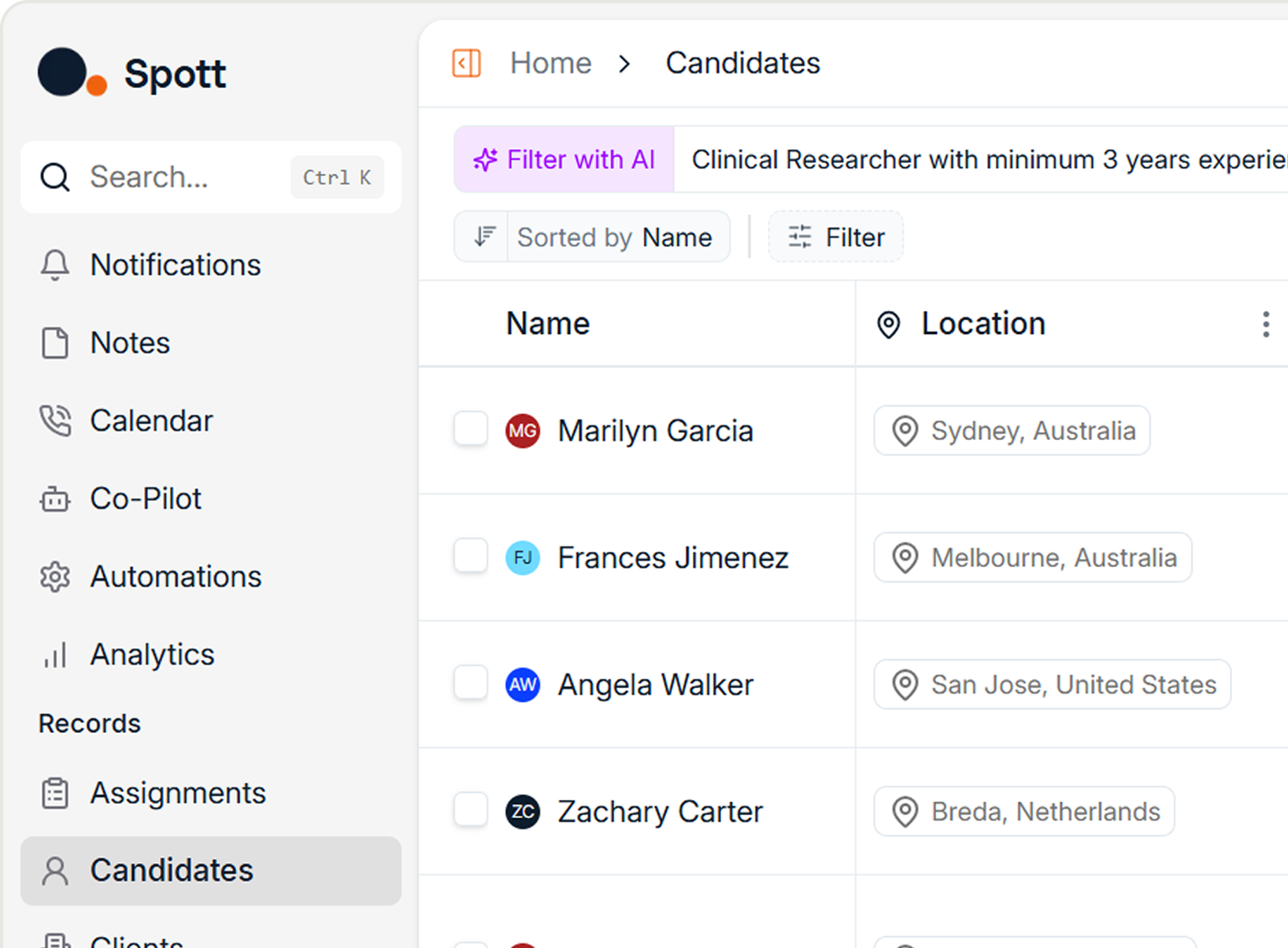
That is what we built Spott to do. Bring a role your current system's search has failed on and see the difference for yourself. Book a demo.

Frequently Asked
Because most ATS platforms use relational databases that only match exact keywords and tags. If a candidate wasn't tagged with the words you're searching, the system can't connect them to your role, even when their experience is a perfect fit. Search by meaning fixes this by matching what candidates actually do, not what they were labeled.
A candidate database that receives new records but rarely produces placements, because recruiters can't find or trust what's in it. Records go in, keyword search fails a few times, and the team defaults to LinkedIn, leaving years of sourced and screened candidates unused.
Usually, yes. Full Recruiter seats are commonly quoted at roughly $10,000+ per year each, and the bigger cost is recruiter time: 2 hours a day of LinkedIn sourcing is 500+ hours per recruiter per year, much of it re-finding people already in your ATS. Making your own database searchable attacks both costs at once.
No. With an AI-native system the AI reads the records as they are, including free-text notes and old resumes, so meaning-based search works without a manual tagging project. Moving the data itself typically takes from a day to a few weeks, depending on the size of your database and how fast you give feedback.
If your firm has been placing candidates for more than a few years, it almost certainly is. Check two things: how many records you hold, and what share of current placements come from them. A six-figure record count producing single-digit placement share is a graveyard, and that gap is your cheapest growth channel.



Outp(l)ace everyone.
You can’t win tomorrow’s placements
with yesterday’s tools.