Spott vs JobAdder
In depth review
Discover the ideal ATS/CRM solution for your business as we
compare the top contenders for you in our head-to-head series
Last reviewed: July 2026
JobAdder is a cloud-based ATS and CRM for recruitment agencies and in-house talent teams. Founded in Sydney in 2007 and now part of the SEEK group, it says over 25,000 recruiters use it, with a customer base weighted toward Australia and New Zealand. The platform covers the core recruitment workflow: candidate management, job posting across 200+ boards, pipeline tracking, and client relationship management. This review covers what it includes, what its AI does, what it costs, and how it compares with Spott.
The short version: JobAdder is a traditional ATS with broad job-board distribution, and its AI layer, "Adder Intelligence," arrived in November 2025 and sits above a database designed in 2007. Spott was built AI-native, with matching, note-taking, enrichment and outreach in the platform rather than added to it, and both its prices published.
Traditional ATS with an AI layer vs AI-native platform
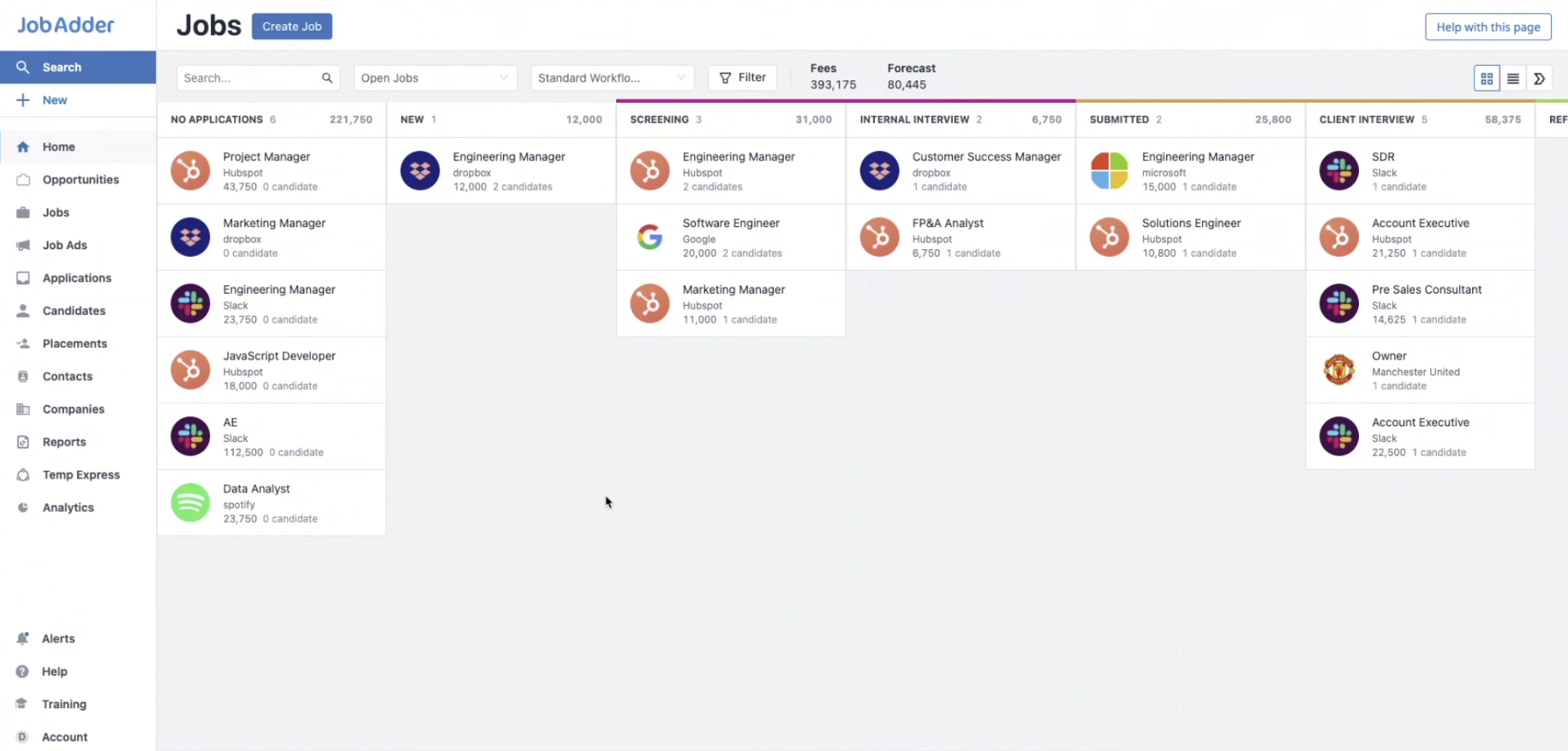
JobAdder's approach: a recruiting database built in 2007, with AI added on top. Adder Intelligence launched in November 2025 and covers summaries, data-hygiene suggestions, AI job descriptions and skill coding. It starts on the Essential plan, so the entry tier carries none of it, and the newest pieces (transcript-aware Smart Sync, the Campaigns Email Sequencer) are still in beta.
Spott's approach: one AI-native data model. Matching reads meaning across the whole database, the note-taker turns calls into structured records, and the AI is included in both published plans. Core is $139 and Pro is $199 per user per month billed annually, on the pricing page.
Spott vs JobAdder at a glance
| Category | Spott | JobAdder |
| ATS/CRM core | AI-native ATS and CRM; every recruiting model on one database, one login | ATS + CRM with agency and in-house editions; broad job-board distribution |
| Ownership | Independent, YC-backed | SEEK group (controlling stake since 2020) |
| AI approach | AI-native from day one and included in every plan, not added later | Adder Intelligence, added Nov 2025, from the Essential plan up |
| Search & matching | Semantic matching on CVs, notes, transcripts, attachments; shows why each match ranks | Keyword and skill-tag search; Smart Summary rates fit on top |
| Data enrichment | On-demand enrichment on Pro, credit-metered; contact gaps filled when you ask | Smart Sync recommends profile updates for review |
| AI note-taking | Built-in AI note-taker, every plan; calls transcribed and summarised for you | No native call transcription; dictation only |
| Outreach & automation | Multi-channel campaigns and automations, live on Pro | Standard automations from Essential; advanced (Roi-AI) on Pro; Email Sequencer in beta |
| Reporting | Advanced dashboards with no tier upgrade needed | Standard analytics from Essential; advanced dashboards on Pro |
| Pricing | $199/user · All-in-one platform | Quote-only across four plans (Lite / Essential / Pro / Business)* |
*JobAdder publishes no prices; plan structure from its pricing page, July 2026. Comparison based on JobAdder's public pages and documentation.
JobAdder pricing
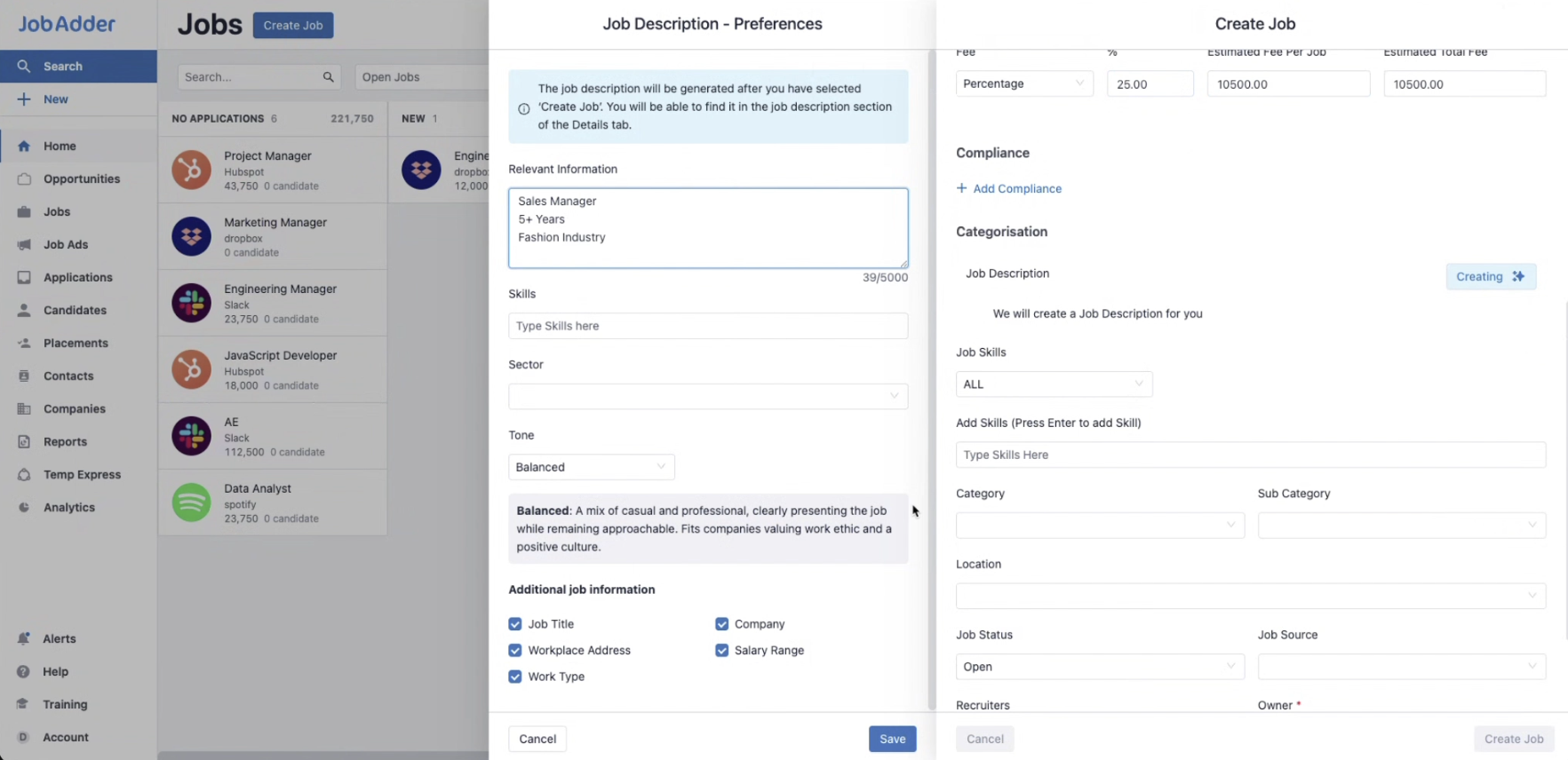
JobAdder doesn't publish prices. Its pricing page lists four plans and routes you through a chat, a demo and a tailored proposal:
- Lite (new and boutique agencies): the core ATS, job posting and distribution, candidate and client management, temp and contract management, a BD pipeline, automated reminders and the report library. No AI.
- Essential (growing agencies): everything in Lite plus Adder Intelligence (Smart Summaries, Smart Sync, Smart Job Descriptions, Smart Floats), multiple workflows, standard automations, standard analytics, lead generation and API access.
- Pro (established agencies): everything in Essential plus advanced automations powered by Roi-AI, advanced analytics, unlimited custom reports, a dedicated success manager and a sandbox.
- Business (in-house teams): a tailored in-house edition.
Add-ons sit outside the plans: dedicated IP, API and sandbox (free on Pro), SSO, Broadbean, Smart Forms and a Hiring Manager Portal.
The catch is that none of it comes with a number attached. JobAdder doesn't publish a single price, so every figure a buyer works with is a quote. Third-party directories only estimate it, putting the entry point in the low-to-mid three figures per user per month and toward the pricier end for the category, but those are directory estimates, not JobAdder's own numbers. The AI starts one tier above the entry plan, and the one thing you can't do is look the price up.
Spott takes the opposite position. Core is $139. Pro is $199. Per user, per month, on an annual agreement, with the AI in both and enrichment credits the only metered line. Every figure a shortlist needs is on the pricing page.
Bottom line: JobAdder's price is a proposal, and its AI starts one tier above the entry plan. Spott's price is public, and the AI is in both plans.
AI and automation
JobAdder's Adder Intelligence, launched November 2025, is the platform's native AI set: Smart Summary (a fit summary drawn from resumes, applications and notes), Smart Sync (scans notes and activities to suggest profile updates, now extended to resumes and transcripts in beta), Smart Job Descriptions, Smart Floats (suggested shortlists), and Smart Skills (AI skill coding from resumes, which shipped in March 2026). The newest outreach piece, a Campaigns Email Sequencer, is in beta. There is no native call transcription: the closest feature is speech-to-text dictation into a note field, and full transcription runs through partner tools. Adder Intelligence starts on the Essential plan, so Lite users get no AI.
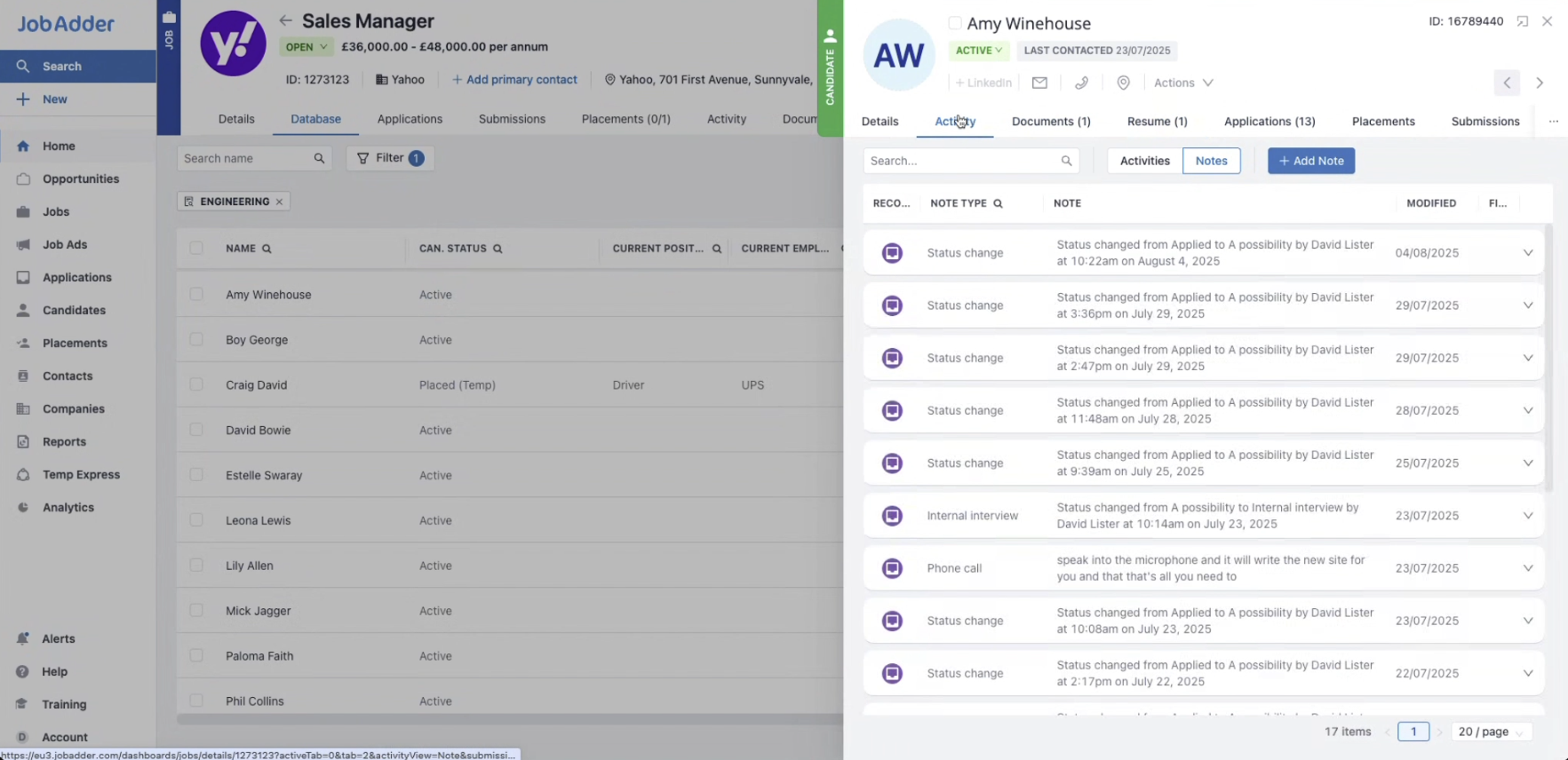
Spott's AI is the foundation rather than a layer. Matching reads meaning across CVs, notes, call transcripts and attachments, ranks candidates by fit rather than keyword overlap, and surfaces why each one made the list. The note-taker captures Zoom, Teams and Meet calls as structured notes on the record, on every plan, while campaigns and automations sit on Pro.
Bottom line: JobAdder added AI on top of a 2007 database. Spott's records were built on it.
Search and candidate matching
JobAdder offers keyword and skill-tag search with filters for skills, location, availability and custom fields, and when you attach skills to a job it ranks candidates by how many of those skills they match. Smart Summary then rates how a shortlisted candidate fits the role. It is a summary layer on top of standard search rather than a different matching method, and it works from the tags and fields in the record.
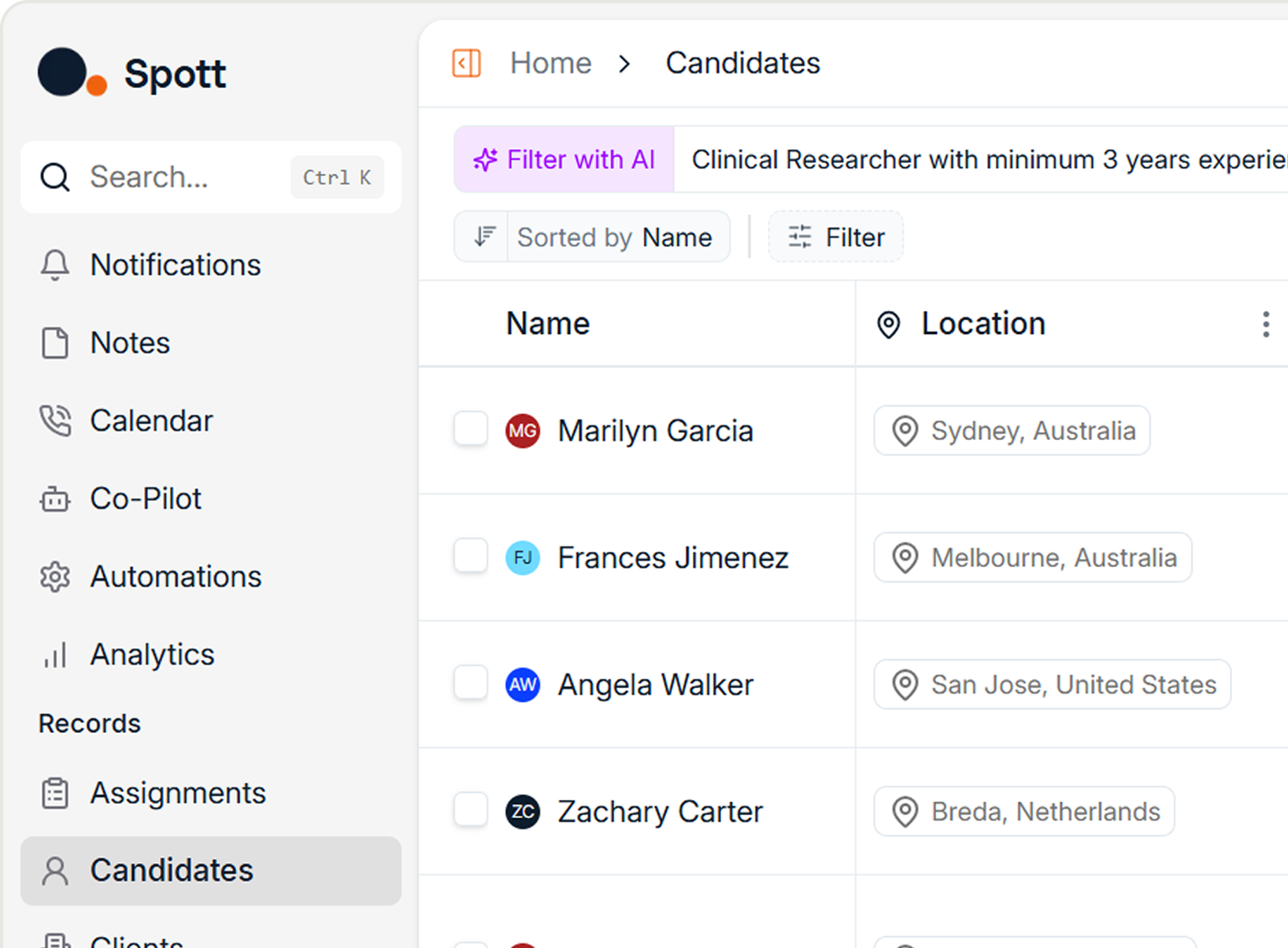
Spott's matching works differently by design. Describe what you need in plain language and it reads work history, skills, notes and conversation context to rank candidates by fit, with the reasoning shown, rather than returning string matches. The AI is the search, not a summary bolted onto it.
Bottom line: JobAdder ranks on keyword and skill-tag overlap. Spott ranks on meaning.
Data quality and enrichment
Keeping candidate data current is one of the hardest problems in recruiting. JobAdder's Smart Sync scans notes and activities to flag gaps and recommend profile updates for a person to review and apply. It is a data-hygiene aid rather than an automatic refresh, and resume parsing extracts basic fields, with skills tagged manually.
Spott's enrichment runs on demand on the Pro plan, filling missing emails, phone numbers and company details on the records you choose, metered by credit. With the note-taker writing every call back to the record, the database improves as people use it rather than decaying between clean-ups.
Bottom line: JobAdder suggests fixes for review. Spott fills the gaps on demand and logs the conversations that keep records current.
Reporting and analytics
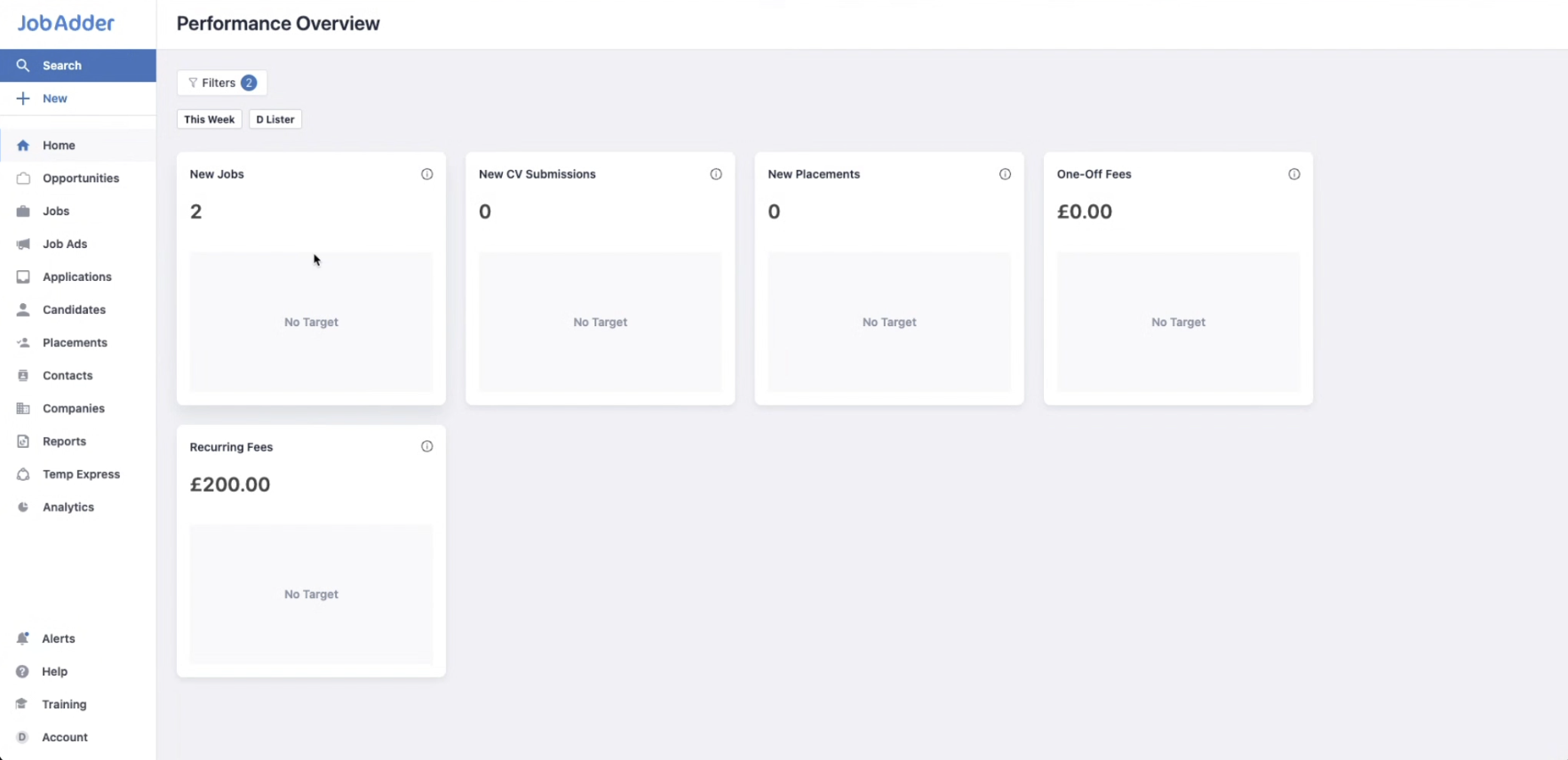
JobAdder tiers its reporting. Standard analytics and KPI dashboards come with Essential; the advanced dashboards, benchmarks and unlimited custom reports sit on Pro, per its pricing page. Firms on Lite or Essential work with the standard set unless they upgrade.
Spott includes advanced analytics that track placements, time-to-fill, source effectiveness and team performance, built for recruiting workflows and available without the top tier.
Bottom line: JobAdder's deeper analytics are a Pro-plan feature. Spott's are in the platform.
Outreach and candidate engagement
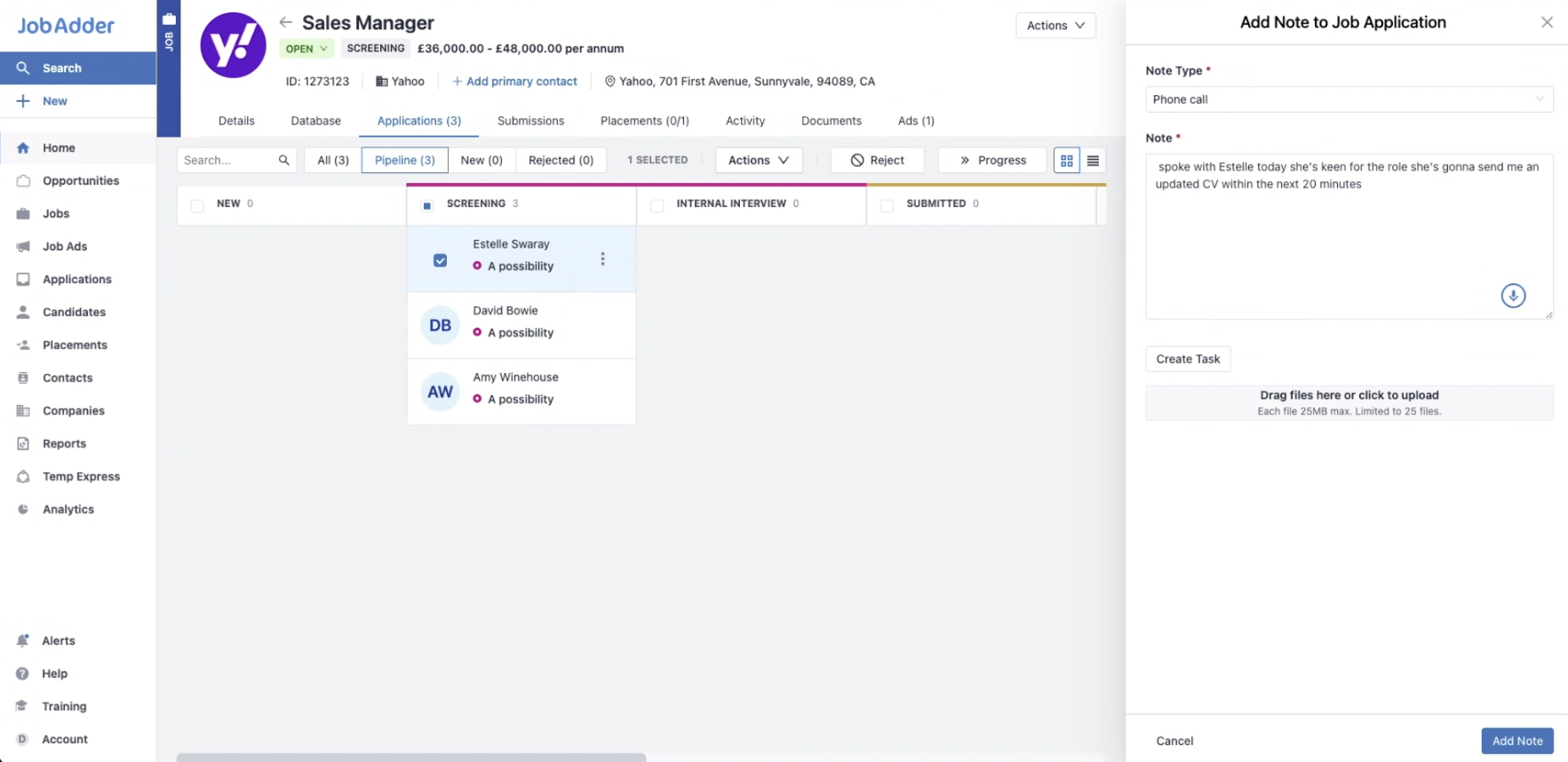
JobAdder covers email with templates, merge fields and bulk sending, and its native Campaigns Email Sequencer for multi-step outreach is in beta. Standard automations begin on Essential and the advanced Roi-AI automations sit on Pro.
JobAdder posts to 200+ job boards, with a deep SEEK Talent Search Connect integration and tracking URLs across channels, which carries weight in the ANZ market where SEEK dominates. JobAdder's Lead Feed surfaces daily BD leads from companies in your system, listed under the Essential plan.
Spott runs campaigns and automations on the Pro plan, with multi-step, multi-channel sequences and automated follow-ups, and job distribution through the Broadbean integration. Mail, calendar, WhatsApp and SMS stay on the candidate's record so the follow-up and the history live in one place.
Bottom line: JobAdder covers more job boards; its sequencing is newer and tiered. Spott's outreach and follow-up are built in on Pro.
Migration and onboarding
JobAdder offers a DIY import you run yourself and a managed migration its team handles, quoted separately, with a dedicated implementation consultant and data analyst on managed moves. Timelines run from roughly two to four weeks for a straightforward move up to eight to twelve weeks for complex or FastTrack-system migrations.
Spott's migration runs about four weeks, run by Spott's in-house migrations team; candidates, clients, jobs, notes and activity history land on the matching records intact.
Where JobAdder is still a good choice
- You recruit in Australia or New Zealand. The SEEK Talent Search Connect integration and job-board reach are greatest in JobAdder's home market.
- Job-board distribution is central to your desk. 200+ boards and channel tracking URLs make broad posting straightforward.
- You want a straightforward ATS that is quick to learn. The interface is uncluttered and the core workflow is well worn.
- You run an in-house talent team. The Business edition is built for in-house hiring rather than agency billing.
Where Spott wins
- AI in every plan, not one tier up. Semantic matching, the note-taker and AI drafting come with Core, not just the higher tiers.
- Matching on meaning. Ranked by fit across CVs, notes, transcripts and attachments, with the reasoning shown, rather than skill-tag overlap.
- The conversation on the record. Mail, calendar, WhatsApp and SMS on one timeline, plus a built-in note-taker instead of dictation.
- Both prices are public. Core $139 and Pro $199 per user per month billed annually, no quote required.
- Independent ownership. Spott is not owned by a job board, so there is no parent whose interests sit beside yours.
- European by default. Spott is EU-based and EU-hosted, ISO 27001 certified, and does not use candidate data to train AI models.
What are the best JobAdder alternatives?
That depends on what sent you looking. For a fuller shortlist, we keep a dedicated guide to the best JobAdder alternatives. For AI-native recruiting without a job-board parent, Spott makes that case. If you are weighing other incumbent suites, read our reviews of Bullhorn, Vincere and Recruit CRM, or start with our top 10 ATS and CRM platforms for recruiting agencies in 2026.
Bottom line
JobAdder is a straightforward ATS with broad job-board distribution and a large ANZ base, and Adder Intelligence has added a tiered AI set since late 2025. For firms that want a recruiting database with wide posting, it covers the core workflow.
Two things are worth weighing before you commit. The AI that adds the most value starts a tier above the entry plan, and the platform sits inside the SEEK group, so an agency's candidate and client data lives in a system owned by a job board. Spott is the other path: AI-native from the start, included in both published plans, independently owned, and EU-hosted.
Want to compare the two on your own numbers? Book a demo and we'll map it against your current per-seat spend.

A full side-by-side breakdown for most platforms we get compared to.





Frequently Asked
JobAdder doesn't publish prices. It has four plans, Lite, Essential, Pro and an in-house Business edition, quoted by geography and team size after a demo. Third-party directories estimate the entry point in the low-to-mid three figures per user per month, but those are estimates, not JobAdder's own figures. AI (Adder Intelligence) starts on the Essential plan, so Lite has none, and managed data migration is quoted separately. Spott publishes $139 (Core) and $199 (Pro) per user per month billed annually, with the AI in both.
Yes. SEEK, the job-board operator, invested in JobAdder in 2014 and took a controlling stake in 2020, and JobAdder describes SEEK as its parent company. JobAdder states that customer data is kept separate from SEEK. For agencies, storing candidate and client data in a platform owned by a job board is worth a question about long-term alignment.
Yes. JobAdder launched Adder Intelligence in November 2025: Smart Summary (fit summaries), Smart Sync (profile-update suggestions, now extended to resumes and transcripts in beta), Smart Job Descriptions, Smart Floats (shortlists) and Smart Skills (AI skill coding, shipped March 2026). A Campaigns Email Sequencer is in beta. The features start on the Essential plan, so Lite users get no AI, and there is no native call transcription.
A straightforward migration runs roughly two to four weeks; complex or FastTrack-system moves take eight to twelve. JobAdder offers a free DIY import or a paid managed migration with a dedicated implementation consultant and data analyst. By comparison, a Spott migration is typically about four weeks, handled by Spott's in-house migrations team.
The main alternatives for recruitment agencies include Spott, Bullhorn, Vincere, Recruit CRM and Loxo. Spott is the strongest option for firms wanting AI-native capabilities, independent ownership rather than a job-board parent, and the AI included in every plan. Our dedicated JobAdder alternatives guide covers the wider field.
JobAdder is a traditional ATS, widely used in ANZ, with broad job-board distribution and an uncluttered interface; its AI was added in late 2025 and starts on the Essential plan. Spott is AI-native, with semantic matching, a built-in note-taker, on-demand enrichment and outreach campaigns, the AI in both published plans, independent ownership and EU hosting.

Outp(l)ace everyone.
You can’t win tomorrow’s placements
with yesterday’s tools.