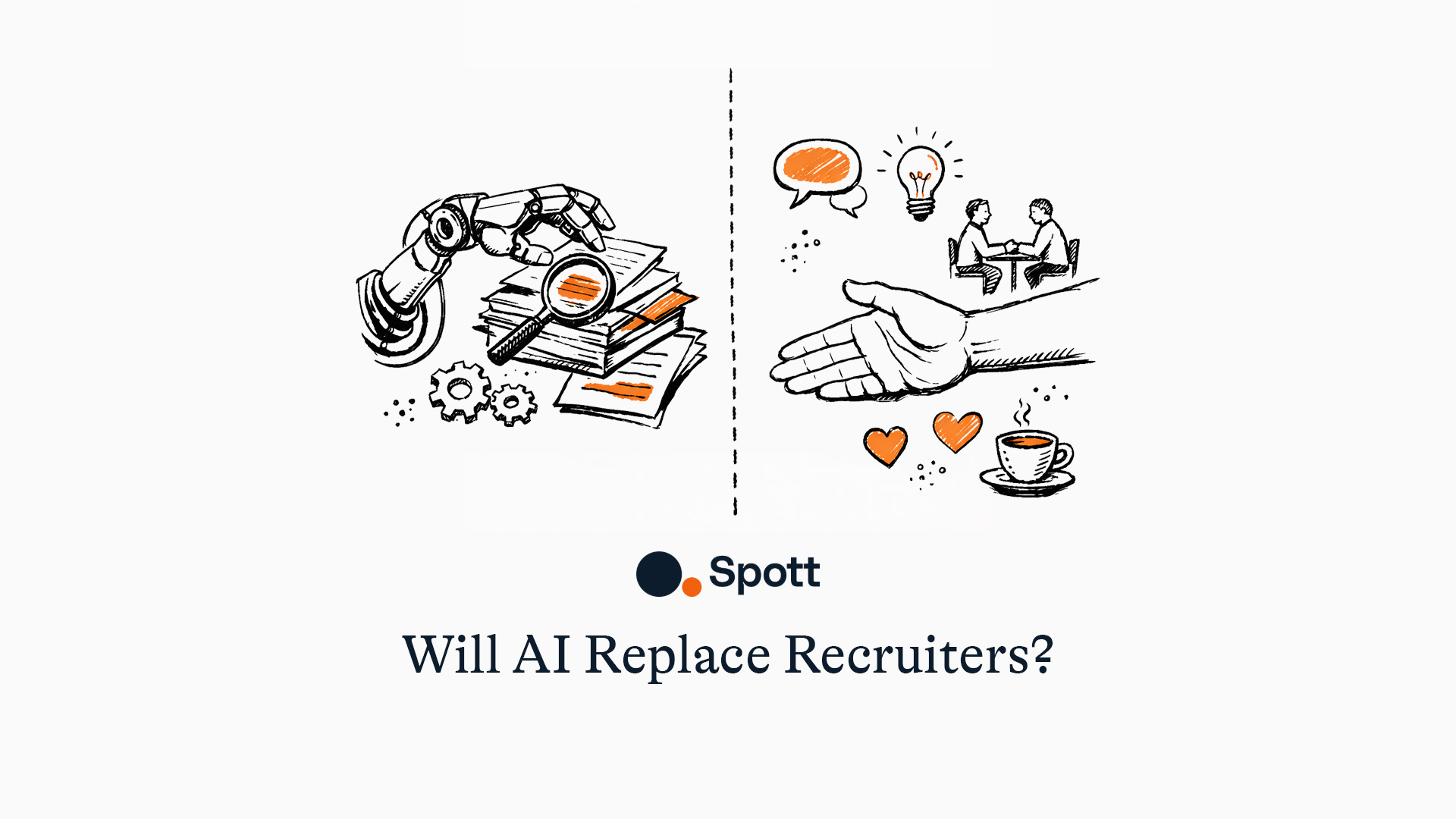
Will AI Replace Recruiters? A Framework for What Changes and What Doesn't
Every profession is a mix of two types of work: intelligence work and judgment work.
Intelligence work is complex but rule-based. It requires processing large amounts of information, pattern recognition, and speed. It can be defined, measured, and optimised. Think data entry, searching databases, writing first-draft emails, screening CVs for basic requirements.
Judgment work is different. It runs on instinct built over years of experience. It requires reading between the lines, understanding context that can't be quantified, and making calls that no framework fully captures. Think closing a client, reading a room, or convincing a passive candidate to make a career move.
AI is rapidly taking over intelligence work across every industry. Judgment stays human.
Recruitment is a textbook example of this split - and understanding where the line falls is the key to building a firm that thrives in 2026 and beyond.
What is intelligence work in recruitment?
Intelligence work in recruitment covers every task that involves processing information at speed: sourcing candidates, updating records, writing outreach, screening for basic criteria. These tasks are essential but repetitive. They follow patterns. And they consume the bulk of a recruiter's day.
BCG found that 92% of companies using AI in recruitment already see measurable benefits. In the staffing industry specifically, SIA's 2025 State of Staffing report shows AI adoption among agencies jumped from 48% to 61% in a single year - with 45% now using AI for candidate matching and 43% for database management.
Here is where AI is already outperforming manual effort.
Matching candidates to roles
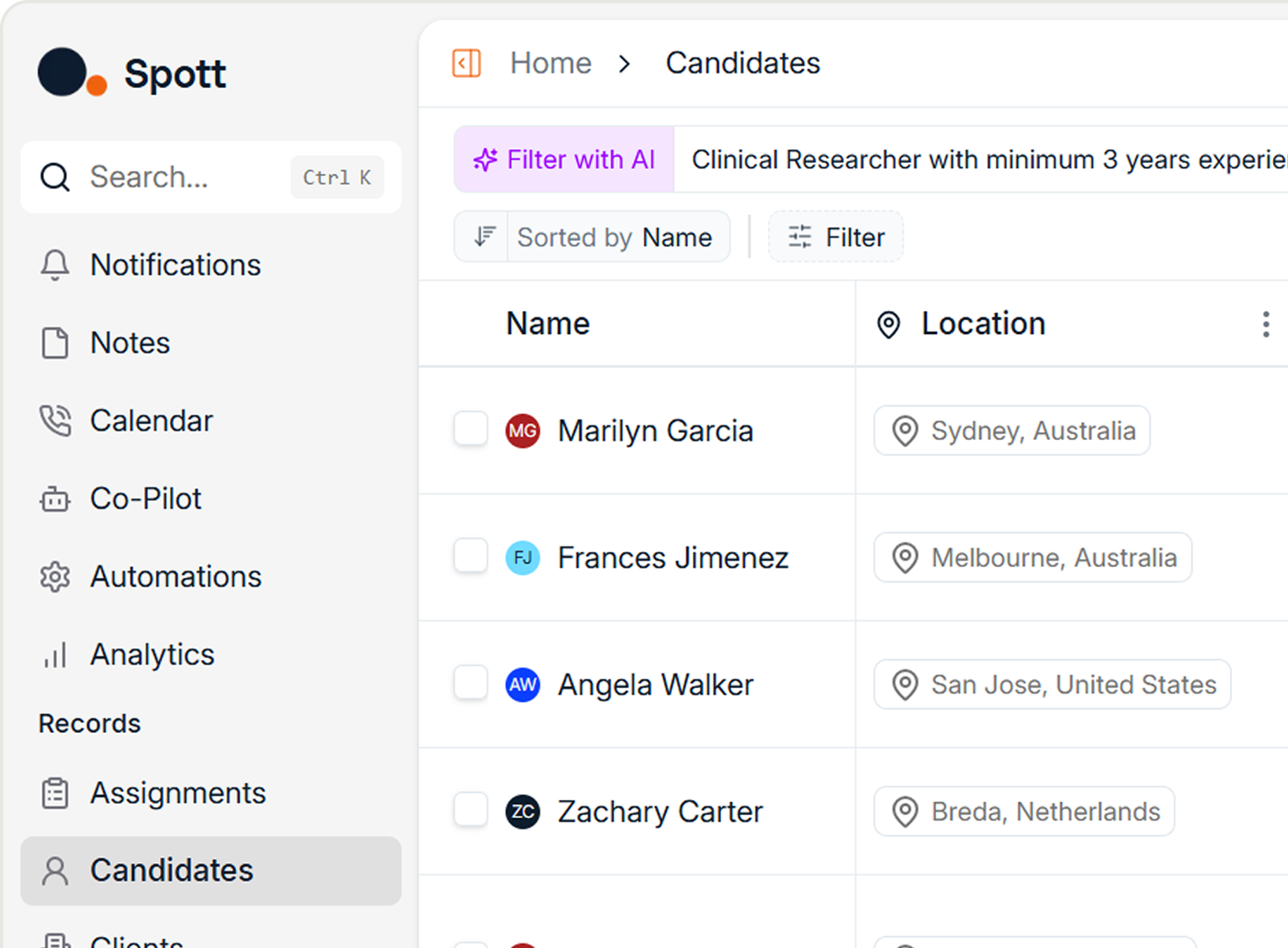
Search 100,000 candidates and return the 100 most relevant ones in seconds - based on meaning, not keywords. AI doesn't scan for job title matches. It reads call transcripts, recruiter notes, messages, and career context to understand who actually fits.
A recruiter doing this manually might spend hours building Boolean strings and scrolling through results. An AI-native ATS does it before you finish your coffee - and surfaces candidates that keyword search would miss entirely, like someone who mentioned interest in advisory roles during a call six months ago.
Keeping candidate profiles up to date
Stale data is one of the biggest problems in recruitment databases. A candidate changes roles, moves cities, or adjusts their salary expectations - and your ATS still shows last year's information.
AI solves this through continuous data enrichment. Every interaction is captured and synced back to the candidate profile automatically. No more discovering a prospect changed jobs three months ago when you call them. The database stays current without manual effort.
Writing personalised outreach at scale
Not generic mail merges with a first name token. AI-driven outreach draws from all available context - role history, recent interactions, stated preferences, communication style - and generates genuinely personalised messages at scale.
The difference is measurable. Personalised outreach based on full candidate context consistently outperforms template-based campaigns on response rates. And it takes seconds instead of minutes per message.
Screening for essentials
Availability, salary expectations, notice period, visa status, location preferences. These are binary qualifiers that need to be confirmed before any real conversation happens.
This is especially critical in temp and contract recruitment where speed determines who wins the placement. AI can screen for these essentials instantly, filtering your longlist down to candidates who are actually available and within range - before a recruiter picks up the phone.
What is judgment work in recruitment?
Judgment work is everything that requires human intuition, emotional intelligence, and relationship capital. These are the tasks where experience matters more than data, and where the best recruiters differentiate themselves.
No AI model can replicate what a senior recruiter knows after 10 years of reading people, navigating politics, and building trust. Here is why.
Assessing culture fit
"Culture fit" means something very different at every company. The startup that says they want someone "entrepreneurial" and the corporate that uses the same word mean completely different things. One means scrappy and comfortable with ambiguity. The other means self-starting within a defined structure.
That nuance lives in a recruiter's head - built from years of placing people and seeing who succeeds where. No data model captures it, because culture is felt, not measured.
Negotiation
Landing the fee. Getting exclusivity terms. Holding your margin when a client promises "we'll give you volume." Knowing when to push and when to give ground.
Negotiation is pattern recognition built on experience, emotional intelligence, and timing. AI can prepare you with data - market rates, competitor benchmarks, historical fee agreements. But it can't sit across from a hiring manager and read the room. It can't close the deal.
Reading people
Knowing that a candidate says they want a bigger title but actually wants flexibility. Picking up on hesitation that doesn't show up in any transcript. Sensing when someone is about to accept a counteroffer before they say it.
This is the craft of recruitment - the part that separates good recruiters from great ones. It's built through thousands of conversations, not through training data.
Building long-term relationships
Trust with a hiring manager built over years. Convincing someone to take a career risk because they trust your judgment. Being the person a candidate calls when they're weighing two offers at midnight.
Relationships compound over time, and they're built on human connection that no algorithm can replicate. A recruiter who has placed five people at a company over three years has context and credibility that no AI can substitute.
Why this distinction matters for recruitment firms in 2026
AI adoption in HR and recruiting jumped to 43% in 2025, up from 26% in 2024. More than 80% of enterprises now use AI for significant parts of their hiring process. Over 50% of talent leaders plan to add autonomous AI agents to their recruitment workflows this year.
The shift is happening fast. But the firms that benefit most won't be the ones that adopt AI for everything - they'll be the ones that deploy AI on the right tasks.
Every hour your team spends on intelligence work - manual database updates, Boolean search strings, copy-pasting outreach templates, reformatting CVs - is an hour not spent on judgment work. And judgment work is where fees are earned.
The maths is straightforward:
- More time on intelligence work = competing on speed and volume against AI that's faster than any human
- More time on judgment work = competing on relationships, insight, and trust - things AI cannot replicate
How AI-native platforms handle this split
The best recruitment technology doesn't try to replace recruiters. It handles the intelligence work so recruiters can focus on judgment work.
That's the difference between an ATS that stores data and one that actively works alongside you. In an AI-native platform:
- Matching draws from call transcripts, notes, emails, and messages - not just CV keywords
- Profiles self-update through continuous data enrichment
- Outreach is generated from full candidate context, not templates
- Screening happens automatically before you start reviewing candidates
- Notes from calls are transcribed and mapped to candidate records without manual input
The intelligence work runs in the background. The recruiter focuses on the judgment calls that actually make placements happen.
The recruiters of the future
The best recruiters in 2026 won't be the ones who are fastest at searching databases or writing outreach emails. Those tasks are already being automated.
The best recruiters will be the ones who master the judgment work - the culture reads, the negotiations, the relationship calls - because they've freed up their time by letting AI handle the intelligence work.
That's the mindset we're building Spott with. Handle the intelligence part wherever possible. Support recruiters on the judgment work. Give them back the hours they used to spend on admin so they can spend it on the work that actually makes placements happen.
The recruitment firms that understand this distinction will outpace the ones that don't.
If you want to see what it looks like when the intelligence work is handled for you, book a demo and see Spott in action.

Frequently Asked
No. AI is replacing the intelligence work in recruitment - matching, database updates, outreach, and screening - but judgment work stays human. Tasks like assessing culture fit, negotiating fees, reading people, and building long-term client relationships require intuition and experience that AI cannot replicate. The recruiters who thrive will be the ones who let AI handle the repetitive tasks so they can focus on the work that actually earns fees.
AI can automate four core areas of recruitment: candidate matching (searching thousands of profiles by meaning, not keywords), profile updating (continuous data enrichment that keeps candidate records current), personalised outreach at scale (generating context-aware messages instead of templates), and screening for essentials like availability, salary expectations, and notice period. These tasks are rule-based and data-heavy - exactly where AI outperforms manual effort.
Intelligence work is complex but rule-based - sourcing candidates, updating records, writing outreach, screening CVs. It requires processing information at speed and follows patterns that AI can learn. Judgment work requires human intuition built over years of experience - reading people, assessing culture fit, negotiating deals, and building trust. AI is rapidly taking over intelligence work, while judgment work remains a uniquely human skill.
AI cannot assess true culture fit (which means something different at every company), negotiate fees and exclusivity terms, read a room during an interview, sense when a candidate is about to accept a counteroffer, or build the long-term trust that makes a hiring manager pick up the phone when you call. These tasks rely on emotional intelligence, relationship capital, and instinct built through thousands of conversations - not training data.
Recruitment firms should deploy AI on intelligence work - matching, data enrichment, outreach, and screening - and free up their recruiters to focus on judgment work like negotiations, client relationships, and candidate assessment. The firms that benefit most are not the ones using AI for everything, but the ones using it on the right tasks. Every hour saved on intelligence work is an hour gained for the relationship-driven work that earns placements.

Outp(l)ace everyone.
You can’t win tomorrow’s placements
with yesterday’s tools.