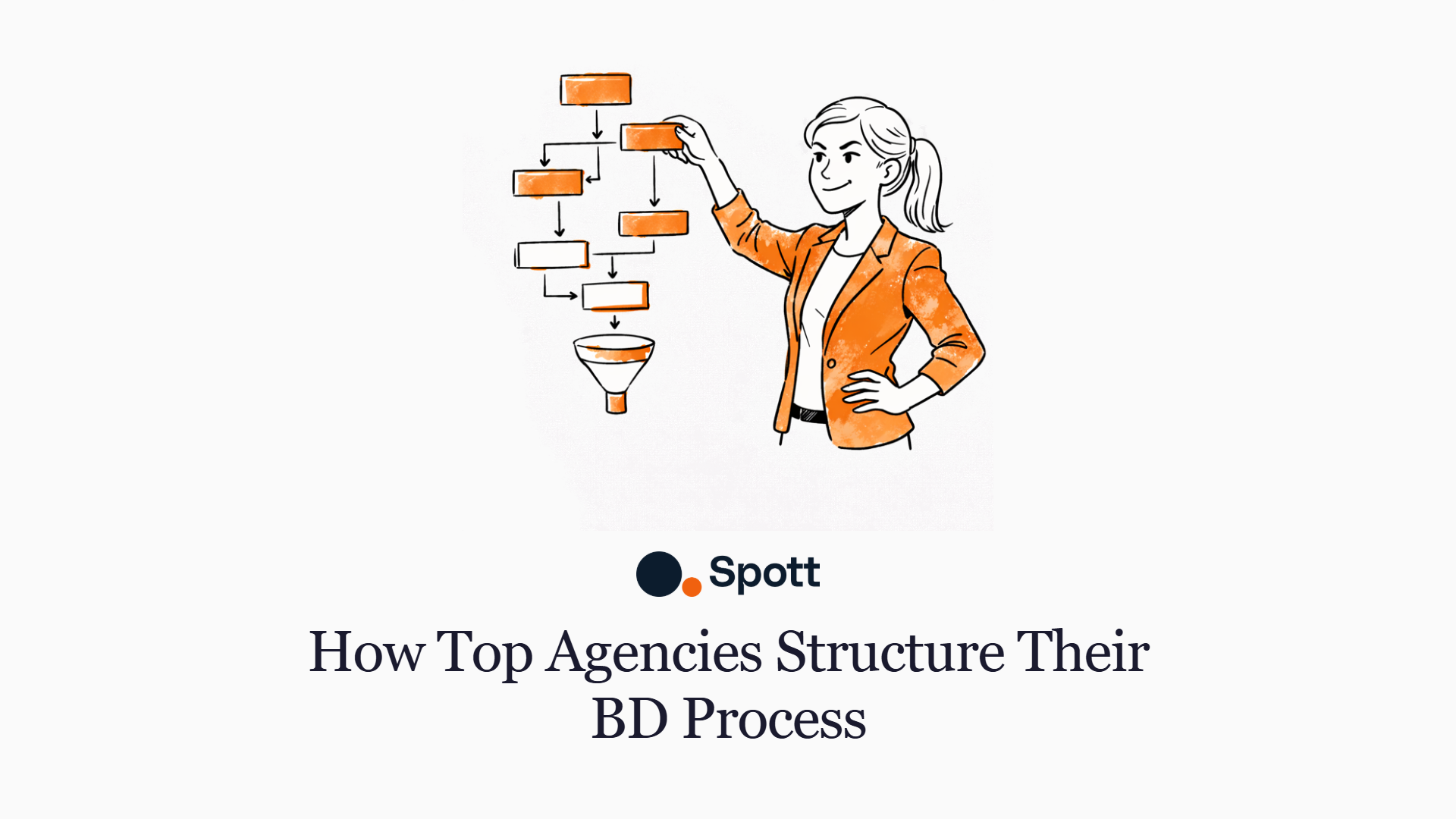
How Top Agencies Structure Their BD Process
Most recruitment agencies treat business development like an afterthought. Something you do when the desk gets quiet or when a big client churns. The agencies that consistently grow do the opposite. They treat BD as a system, not an activity.
Here's how they structure it.
The Problem with Reactive BD
You know the pattern: things are busy, placements are happening, nobody's thinking about new clients. Then a major account goes quiet. Suddenly everyone's scrambling to fill the pipeline.
This creates two problems:
- Desperation shows. Prospects can smell it. Your outreach becomes transactional when you need the deal, rather than consultative when you don't.
- Revenue becomes unpredictable. Feast-or-famine cycles make it nearly impossible to hire, invest, or plan.
Top agencies avoid this by running BD continuously, even when they're busy. Especially when they're busy.
The Four Components of a BD System
1. Target Definition
Before any outreach, high-performing agencies get specific about who they're pursuing. Not "companies that hire" but actual criteria.
Effective targeting includes:
- Industry vertical: Where do you have proven expertise and existing case studies?
- Company size: What's your sweet spot? 50-200 employees? 1,000+?
- Hiring pattern: Companies actively growing vs. steady-state replacement hiring
- Decision maker profile: Talent Acquisition? HR? Hiring managers directly?
- Geography: Where can you realistically service well?
The discipline: Create a written ideal client profile (ICP) and score prospects against it. Stop wasting time on companies that technically could hire you but aren't actually a good fit.
Most agencies skip this step and end up chasing anyone who responds. That's how you end up with low-margin clients who don't value what you do.
2. Outreach Cadence
The agencies winning at BD have structured sequences, not random acts of outreach.
A typical high-performing cadence:
- Day 1: Personalized LinkedIn connection request
- Day 3: Connection accepted → First message (insight-led, not pitch-led)
- Day 5: Email to work address (reference LinkedIn conversation if they responded)
- Day 8: Second LinkedIn message (share relevant content or market insight)
- Day 12: Phone call attempt
- Day 15: Email follow-up (different angle, maybe a case study)
- Day 22: Final LinkedIn message (offer to stay in touch, no pressure)
Key principle: Lead with value, not with "do you have any roles?"
The first touchpoints should demonstrate you understand their world. Share a relevant market insight. Comment on something they posted. Reference a trend in their industry.
Pitching too early kills conversations before they start.
3. Qualification Framework
Not every response deserves equal attention. Top agencies qualify aggressively so they spend time on the right opportunities.
Qualification questions to answer:
- Budget: Do they pay agency fees? What's their typical rate tolerance?
- Authority: Is this person a decision maker or an influencer?
- Need: Are they hiring now, or is this "future interest"?
- Timeline: When are they looking to fill roles?
- Competition: Are they working with other agencies? Exclusively?
The discipline: Create a simple scoring system. A prospect who's hiring now, has budget authority, and isn't locked into another agency is worth 10x more attention than someone who "might have something in Q3."
Many agencies treat every lead equally. That's a mistake. Prioritization is how small teams outperform larger competitors.
4. Pipeline Management
Here's where most agencies fall apart: they generate interest but don't track it systematically.
Pipeline stages that work:
- Prospect: Identified, not yet contacted → Add to outreach cadence
- Engaged: Responded positively, conversation started → Schedule discovery call
- Qualified: Confirmed need, budget, timeline → Send proposal or terms
- Negotiating: Terms under discussion → Work toward agreement
- Client: Signed, ready to work → Begin delivery
- Nurture: Not ready now, but potential later → Quarterly check-ins
The discipline: Review pipeline weekly. Move stale opportunities out. Be honest about what's real and what's wishful thinking.
A clean pipeline with 20 real opportunities is more valuable than a bloated one with 100 "maybes."
Time Allocation: The 60/30/10 Rule
How much time should recruiters spend on BD? There's no universal answer, but here's a framework that works for many growing agencies:
- 60% on active delivery (filling current roles)
- 30% on BD activities (outreach, meetings, follow-up)
- 10% on personal brand and content (LinkedIn posts, thought leadership)
For dedicated BD roles, flip it: 70% outreach and meetings, 20% content and networking, 10% admin and reporting.
The key insight: Block BD time in your calendar like client meetings. If it's not scheduled, it won't happen consistently.
Outreach That Actually Works
Let's get tactical. Here's what separates outreach that gets responses from outreach that gets ignored:
What Doesn't Work
"Hi [Name], I'm a recruiter specializing in [industry]. I'd love to learn about your hiring needs. Do you have 15 minutes for a call?"
This is about you, not them. It gives no reason to respond.
What Works Better
"Hi [Name], noticed you just opened a head of engineering role, and based on the product focus in the JD, it looks like you're scaling the platform team specifically. We just placed a similar role at [comparable company] and learned a lot about what's working in that search. Happy to share what we saw if useful. No pitch, just context."
This demonstrates:
- You've done research (specific role, specific observation)
- You have relevant experience (similar placement)
- You're offering value first (insights, not a sales call)
The Template Framework
Subject line: Specific + relevant (reference their company, role, or situation)
Opening: Observation about their business, not about you
Middle: Relevant insight or experience that adds value
Ask: Low-commitment next step (share info, not "jump on a call")
The Nurture Layer
Not everyone is ready to hire now. The agencies that build sustainable pipelines have a system for staying visible to future clients.
Effective nurture tactics:
- Quarterly market updates: Share salary data or hiring trends for their vertical
- Content sharing: Forward relevant articles with a brief note
- Check-in calls: "Not selling anything, just staying in touch"
- LinkedIn engagement: Comment on their posts, stay in their feed
- Event invitations: Webinars, roundtables, industry meetups
The principle: Stay useful without being annoying. You want to be the first call when they do have a need, not someone they're avoiding.
Metrics That Matter
Track these to know if your BD system is working:
- Outreach volume: Activity level: are you doing enough?
- Response rate: Message quality: is your outreach resonating?
- Meetings booked: Conversion effectiveness: are responses turning into conversations?
- Qualified opportunities: Pipeline quality: are conversations with the right prospects?
- Time to first placement: Relationship velocity: how fast do new clients convert?
- Client acquisition cost: Efficiency: what does it cost to land a new client?
Review these monthly. If response rates drop, your messaging needs work. If meetings happen but nothing qualifies, your targeting is off.
Making It Sustainable
The hardest part of BD isn't knowing what to do. It's doing it consistently when delivery work is demanding your attention.
What helps:
- Block time ruthlessly. BD hours are non-negotiable, even when busy.
- Batch activities. Do all outreach in focused blocks, not scattered throughout the day.
- Use templates wisely. Have frameworks, but personalize meaningfully.
- Track publicly. Share BD metrics with the team. Accountability helps consistency.
- Celebrate small wins. A good meeting is progress, not just signed business.
The Takeaway
The agencies that grow consistently treat BD as infrastructure, not an occasional effort. They have defined targets, structured outreach, qualification discipline, and pipeline hygiene.
None of this is complicated. But it requires commitment to do it every week, whether you feel like it or not.
The best time to build BD pipeline is when you're busy and don't desperately need it. That's when you have leverage, confidence, and the luxury of being selective about which clients you take on.
Start there.
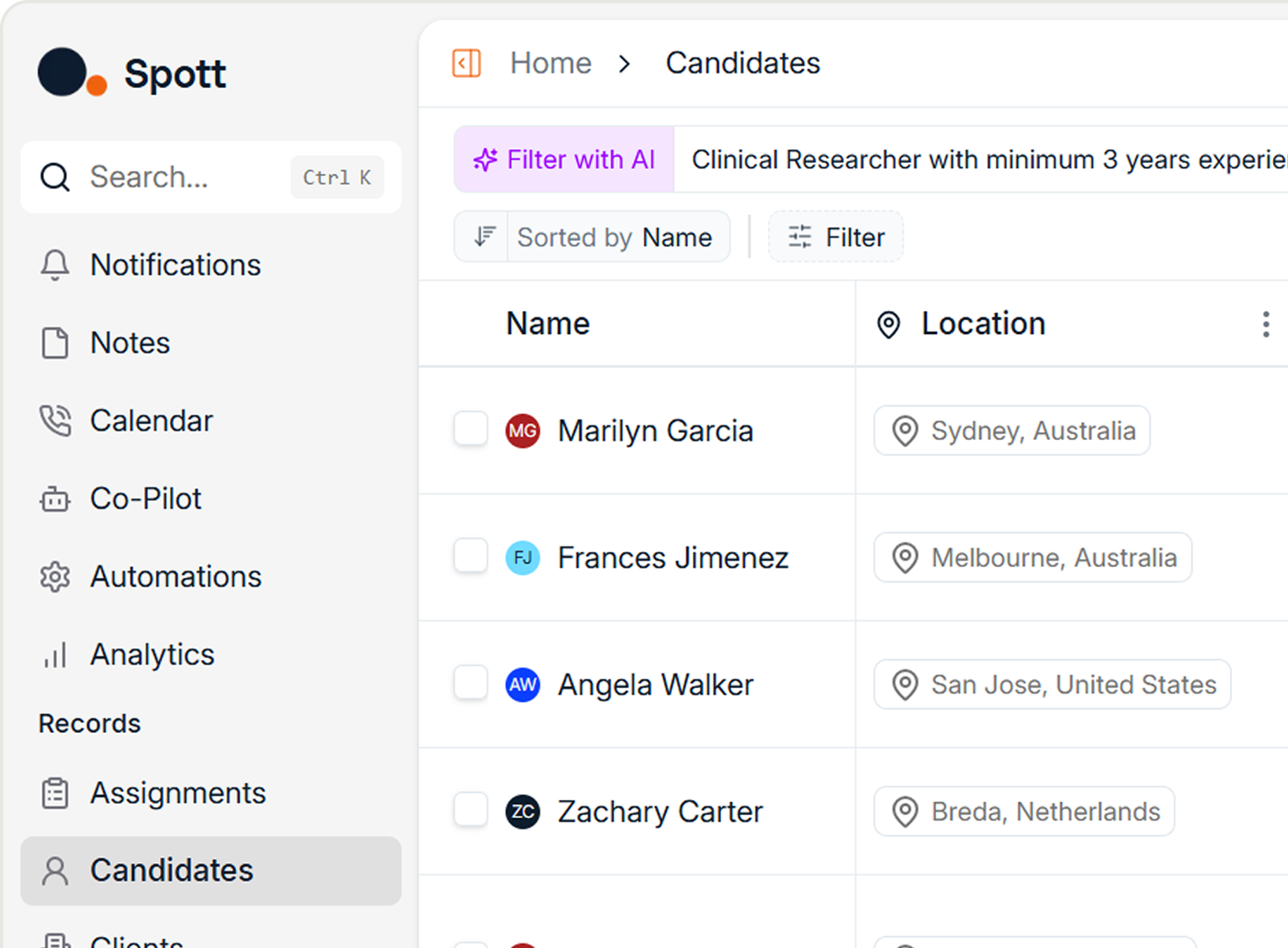
Your CRM should make this easier, not harder. If tracking pipeline stages and outreach sequences feels like a chore, the tool is working against you. Modern systems automate the admin so you can focus on the actual conversations.

Frequently Asked
Top agencies follow a structured 22-day multi-channel sequence: a personalized LinkedIn connection on day one, an insight-led message (not a pitch) on day three, a work email on day five, a second LinkedIn message with content on day eight, a phone call attempt on day twelve, a follow-up email with a different angle on day fifteen, and a final stay-in-touch message on day twenty-two. The key principle is to lead with value rather than asking 'do you have any roles?' -- reference specific details about the prospect's business, share relevant placement experience, and make low-commitment asks. Tracking response rates at each step lets you refine messaging over time.
Score prospects on five criteria: budget authority and fee tolerance, decision-making authority, current active hiring needs, timeline urgency, and whether competitive exclusivity arrangements exist. Create a simple scoring system that prioritizes prospects who are actively hiring and hold budget authority over those expressing only 'future interest.' Move qualified prospects through defined pipeline stages -- Prospect, Engaged, Qualified, Negotiating, Client, Nurture -- and conduct honest weekly pipeline reviews to keep the pipeline clean. An AI-native CRM like Spott can track these interactions and surface which prospects to prioritize based on engagement signals across channels.
The 60/30/10 rule allocates 60% of a recruiter's time to active delivery work, 30% to business development activities, and 10% to personal brand and content creation. For dedicated BD roles, the split flips to 70% outreach, 20% content, and 10% admin. The critical discipline is blocking BD time as non-negotiable on your calendar, even when delivery work demands attention, because inconsistent BD creates feast-or-famine revenue cycles. Batch BD activities into focused blocks, use templates while personalizing meaningfully, and track metrics publicly within your team for accountability.
Track six core metrics monthly: outreach volume, response rates, meetings booked, qualified opportunities generated, time to first placement with new clients, and client acquisition cost. Review these together to diagnose whether problems stem from targeting (low response rates), messaging (responses but no meetings), qualification (meetings but no conversions), or delivery (conversions but slow placements). Celebrate intermediate wins like meetings booked rather than only closed deals to sustain team motivation. A platform with built-in analytics that captures all touchpoints across email, calls, and meetings gives you accurate data without manual tracking across disconnected tools.

Outp(l)ace everyone.
You can’t win tomorrow’s placements
with yesterday’s tools.