How ntiative Put 70,000 IT Profiles Back to Work with Spott
Company: ntiative (NTIATIVE IT Recruitment)
Who: IT recruitment agency in Kraków, Poland, founded by Sonny Van Assche
What: Tech recruitment across Europe, plus RPO and subscription engagements
Before Spott: Bullhorn, then JobAdder
Sonny Van Assche has seen more of the ATS market than most agency owners. He built ntiative through Kraków's tech recruitment boom and ran the business on Bullhorn and then JobAdder along the way.
By the time he started looking again, he knew exactly what was broken.
"With Spott handling admin in the background, we focus where it matters, with customers and candidates."
Sonny Van Assche, Founder, ntiative
The problem: a database nobody wanted to open
ntiative had roughly 70,000 candidate profiles and about 1,000 incoming applications a week. On paper, a goldmine. In practice:
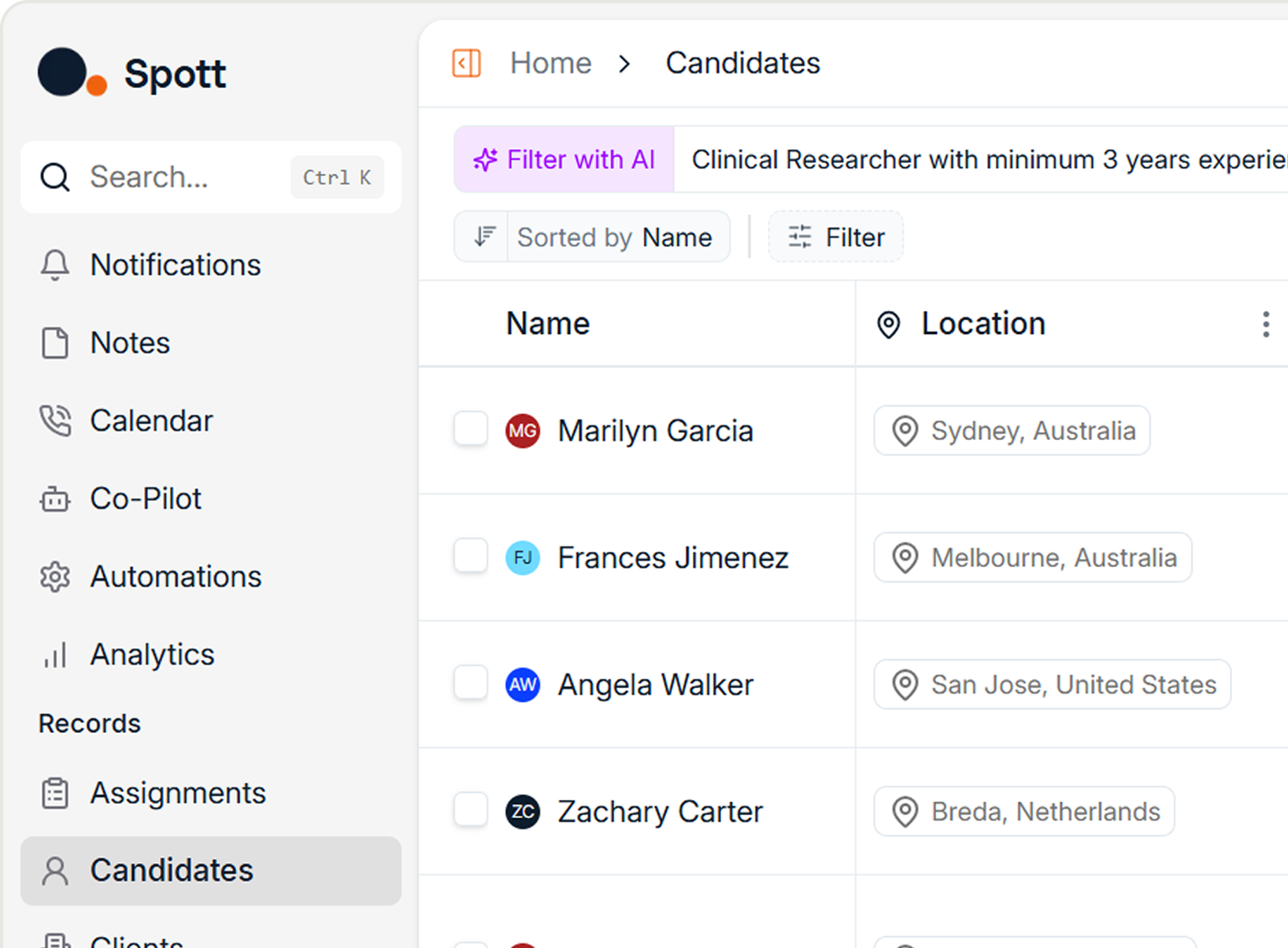
- CVs went in, skills didn't. Both legacy systems needed a paid third-party plugin just to populate fields from a CV. A Python developer's profile would store a name and an email address, not the stack they work with.
- Matching was keyword search wearing a costume. Ask for the best candidates for a role and you got the same results a text search would give you.
- So recruiters go around the database. It is the pattern legacy software trains in every agency: when search stops delivering, recruiters start every role from scratch on LinkedIn instead, however much knowledge is already sitting in the system. The most expensive habit in recruiting, and nobody chooses it on purpose.
He was also clear-eyed about the real risk of any migration: "Your biggest task will always be convincing the recruiters, not the business owners."
Why Spott
Sonny tested the claims feature by feature:
- Real AI matching. Spott is built on a vector database, so matching reads job descriptions, CVs, notes, and conversations by meaning, then explains why each candidate fits. Not keywords.
- CVs that parse themselves. Incoming applications create complete, skill-tagged profiles automatically, and each one gets an instant match score against the right job. At 1,000 applications a week, manual sorting was never an option.
- Website applications flow both ways. Jobs publish from Spott to ntiative's site, and applicants land in the right pipeline automatically.
- One inbox for everything. Email and WhatsApp messages live on the candidate record, sent and received without leaving the platform.
- A data model that fits the business. RPO and monthly subscription clients sit alongside contingent work with their own fee structures and reports, no fake placements required.
The decision process matched his philosophy: Spott demoed to his recruiters first, in their world, on their workflows. They made the call.
What changed
The migration ran the standard Spott playbook: data export, test migration, validation against the real records, then a cutover measured in days, not months.
Today ntiative's recruiters work their pipelines in Spott daily, and the feedback loop goes straight to the people building the product: workflow questions get a working session within the week, and feature requests go directly onto the product team's roadmap. That is what support looks like when the company building your ATS actually wants to know how recruiters use it.
Recruiters avoiding your database? That is a software problem, not a people problem. Book a demo.