How your ATS and CRM will evolve in the next 5 years
What is an ATS?
An Applicant Tracking System (ATS) is recruitment software designed to manage the hiring process—from posting jobs and managing applicants to reviewing resumes and moving potential candidates through the recruitment process. But let’s be honest: traditional ATS and CRM platforms, like Bullhorn, were built for record-keeping, not for modern recruiting teams. They lack the automation, flexibility, and intelligence needed to engage both active and passive candidates and dramatically improve time to hire.
What is an AI-powered ATS?
Enter the AI-powered ATS—a smarter kind of recruitment software that uses artificial intelligence to eliminate repetitive admin, optimize the candidate journey, and empower hiring managers and recruiters. It enables faster sourcing, better matches, and more personalized outreach across your talent pool, giving you a clear edge over agencies still stuck in outdated systems.
In 2025, top talent acquisition teams will either switch to an AI-powered ATS or integrate AI into their workflows. The reason is simple: “AI won’t replace recruiters—but recruitment agencies using AI will replace those that don’t.”
What is the next generation of ATS?
Now look ahead to 2026 and beyond. The next generation ATS goes even further—combining automation with emotional intelligence. It doesn't just drive efficiency—it builds trust, enhances recruitment marketing, and strengthens relationships with both clients and candidates.
In this world, success isn’t blasting 100 AI-generated emails. It’s about using AI to identify your best betting picks—those future hires—and crafting 10 hyper-personalized messages that lead to real conversations and job placements. This is how modern agencies stay top of mind when future job openings arise.
The next-gen ATS is built on this belief: “AI is a Trojan horse for those chasing volume—but a superpower for those focused on quality.”
The best agencies of tomorrow will be those who know how to use AI not just to post jobs and manage applicants, but to master the art of building and nurturing relationships.

Frequently Asked
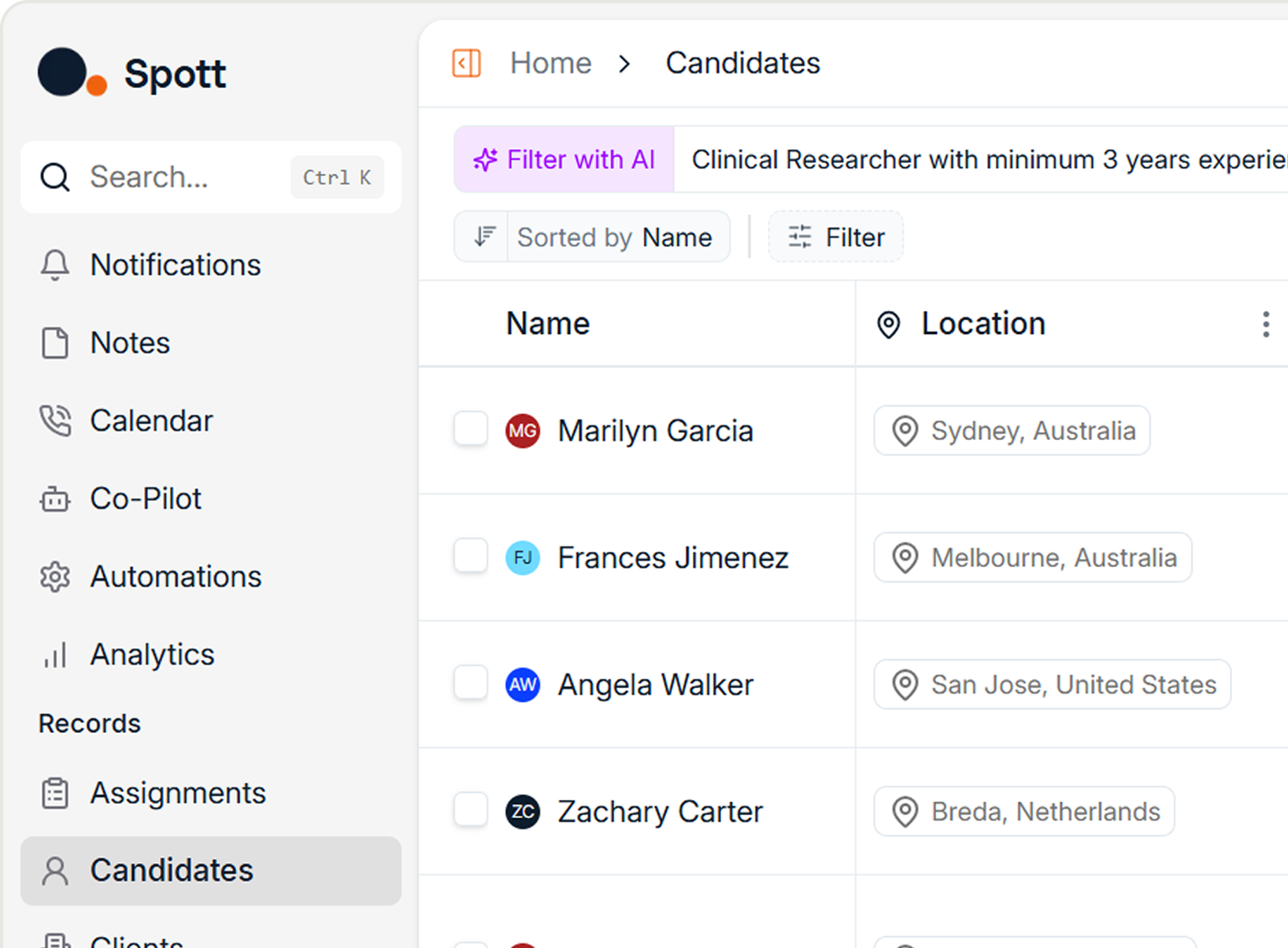
Next-generation ATS and CRM platforms will shift from passive record-keeping to active recruiting partners powered by AI. By 2026 and beyond, expect systems that combine automation with emotional intelligence, enabling personalized candidate engagement over mass outreach. AI-native platforms like Spott already integrate ATS and CRM without compromise, capturing context from calls, messages, and notes rather than just storing data. Agencies that adopt these tools now position themselves to prioritize quality placements over volume.
Traditional ATS platforms were designed for record-keeping, not relationship-building. They lack the automation, flexibility, and intelligence recruiters need to manage both active and passive candidates effectively. These legacy systems don't improve hiring speed or enable meaningful engagement with top talent. Upgrading to an AI-native ATS/CRM gives recruiters tools that actively surface insights, automate outreach, and capture the full context of every candidate interaction.
AI will not replace professional recruiters, but recruiters who use AI will replace those who do not. The U.S. Bureau of Labor Statistics projects 8% employment growth for HR specialists through 2033, faster than the average for all occupations. AI excels at resume screening, scheduling, and predictive analytics, but it cannot replicate the human skills that drive successful placements: cultural fit assessment, relationship building, complex salary negotiations, and creative problem-solving for edge cases. The future belongs to recruiters who strategically combine AI automation with their expertise in these high-value activities.
Start by evaluating whether your current ATS was built around AI or simply bolted it on as an afterthought. Adopt a platform that combines ATS and CRM functionality with built-in intelligence, context capture, and automation. Look for fast migration paths, as AI-native platforms like Spott complete migrations in as little as 4 weeks compared to 16+ weeks with legacy vendors. The sooner you transition, the sooner your team gains a competitive edge in candidate quality and placement speed.

Outp(l)ace everyone.
You can’t win tomorrow’s placements
with yesterday’s tools.