
AI and the Next Generation of ATS/CRM for Recruiting Firms
What if your ATS remembered every conversation, updated itself, and told you who to call next, before you even asked?
Recruitment is entering a new phase. Not because recruiters forgot how to build relationships, but because the speed, volume, and fragmentation of modern recruiting has outgrown the systems meant to support it.
For years, ATS and CRM platforms were built to store data. Candidates, jobs, notes, stages. That worked when recruiting was slower, more linear, and limited to a handful of channels.
That world no longer exists. Today, recruiting happens everywhere, all at once. Conversations move between LinkedIn, WhatsApp, email, calls, and video. Candidates reply when they reply. Clients expect updates immediately. Roles open and close in days. Follow-up timing decides who wins the deal.
And yet, most recruitment technology still assumes humans will manually keep systems up to date. That gap is where AI is about to fundamentally change the ATS and CRM category. By 2026, the systems that win will not just store recruiting data, they will actively run the recruiting workflow alongside you.
Why legacy ATS and CRMs are hitting a wall
Most recruitment software was designed around a simple idea, capture structured data and move candidates through stages.
But modern recruitment is not a tidy funnel. It is hundreds of micro-interactions happening across channels, often simultaneously, with context constantly evolving.
To keep up, agencies added tools on top of their ATS:
- outreach and sequencing tools (e.g. SourceWhale)
- call recording and note-taking tools (e.g. Metaview)
- matching and parsing tools (e.g. daXtra)
- reporting add-ons (e.g. HireAre)
- standalone AI assistants (e.g. ChatGPT)
Each tool solves a single problem. None of them share a common understanding of the full workflow.
The result is faster activity, but more fragmentation.
Recruiters now spend their days copying notes between systems, rebuilding context from memory, switching tabs endlessly, and worrying about what they might have missed. The systems don’t help them think or decide. They just store whatever someone remembered to log.
This is not a tooling problem. It’s a context problem.
Why AI changes the game, if it’s built in, not bolted on
Large Language Models have introduced a real shift in what software can do.
They can extract meaning from unstructured data, calls, messages, notes, documents, and turn it into usable, structured understanding. And they can use that understanding to reason, recommend actions, and generate output.
So far, most ATS and CRM vendors have used AI for surface-level improvements. Drafting emails. Summarising notes. Chatbots answering questions.
Useful, but limited.
The real transformation comes when AI is embedded at the core of the system, not added as a feature.
When AI is native to the data model, it can continuously interpret conversations, connect signals across channels, update profiles automatically, and understand relationships between candidates, jobs, clients, timing, and intent.
That is when ATS and CRM systems stop being databases and start becoming systems that actually understand recruiting.
The three shifts defining the next generation of recruiting software
1. From static records to living profiles
In a traditional ATS, profiles decay the moment recruiters stop updating them.
In an AI-native system, profiles stay alive.
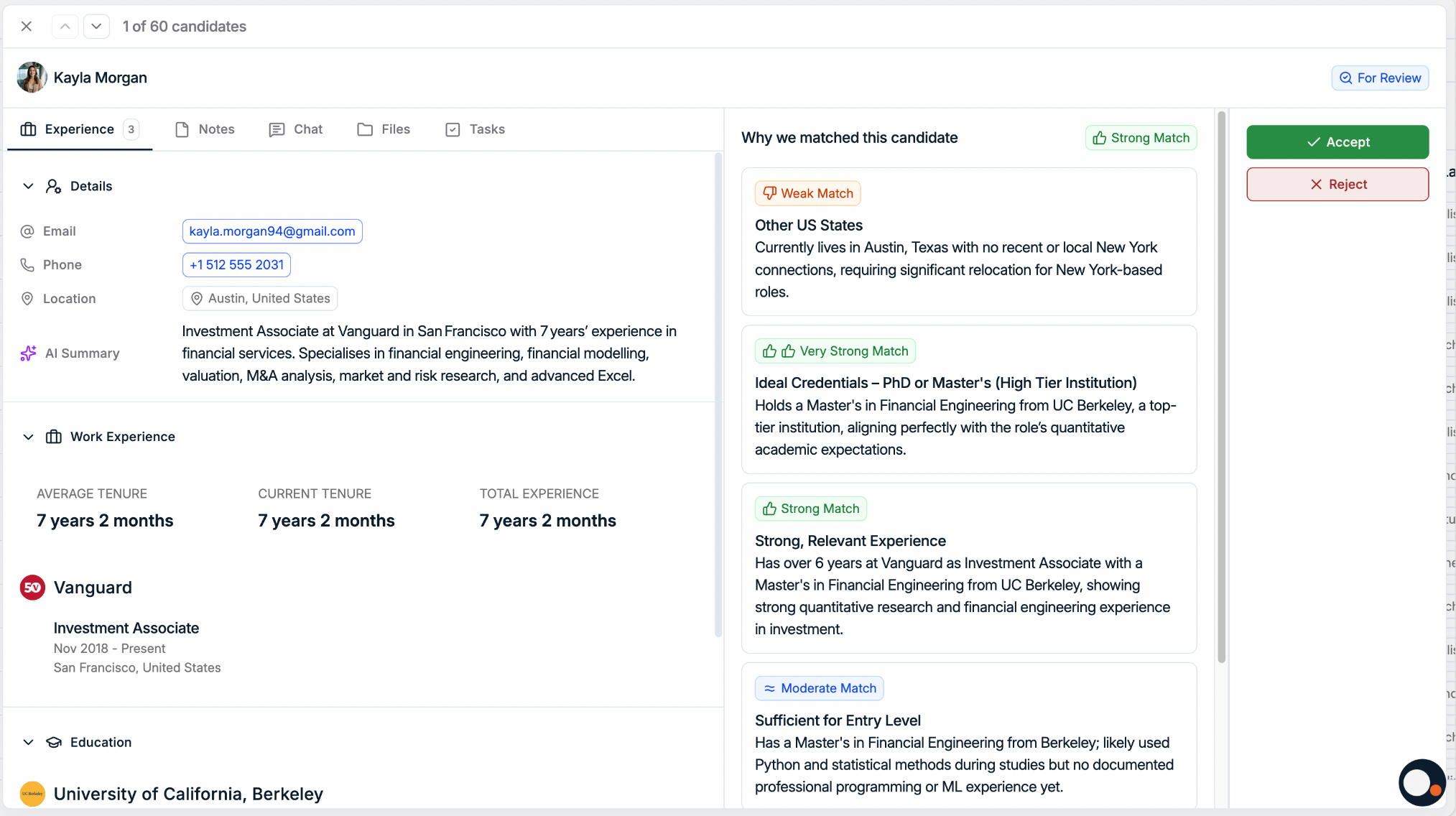
Calls are transcribed automatically. Messages sync across channels. Notes attach themselves to the right candidates and clients. Salary expectations, availability, readiness, and constraints update as conversations happen.
The system no longer waits for recruiters to feed it information. It listens, learns, and keeps context fresh on its own.
This eliminates the single biggest tax in recruitment: manual data entry and context chasing.
Example: A candidate mentions in a call that they’re open to relocation and expecting their first child in March. In a legacy ATS, that context disappears unless someone logs it. In an AI-native system, it’s captured, structured, and surfaced when it matters, like when a remote-friendly role opens or timing becomes relevant.
2. The problem with using too many recruiting tools
Standalone AI tools fail not because the models are weak, but because they see only one slice of reality.
Matching without conversation context is shallow. Outreach without timing context feels generic. Analytics without complete data is misleading.
The next generation of ATS/CRM is built on a single, unified data model where candidates, jobs, clients, conversations, and decisions all live together.
AI works best when it has memory. When every interaction feeds the same system, intelligence compounds instead of fragmenting.
3. From automating tasks to helping recruiters make better decisions
Automation used to mean speeding up tasks.
AI-native systems, such as Spott, go further. They support judgment.
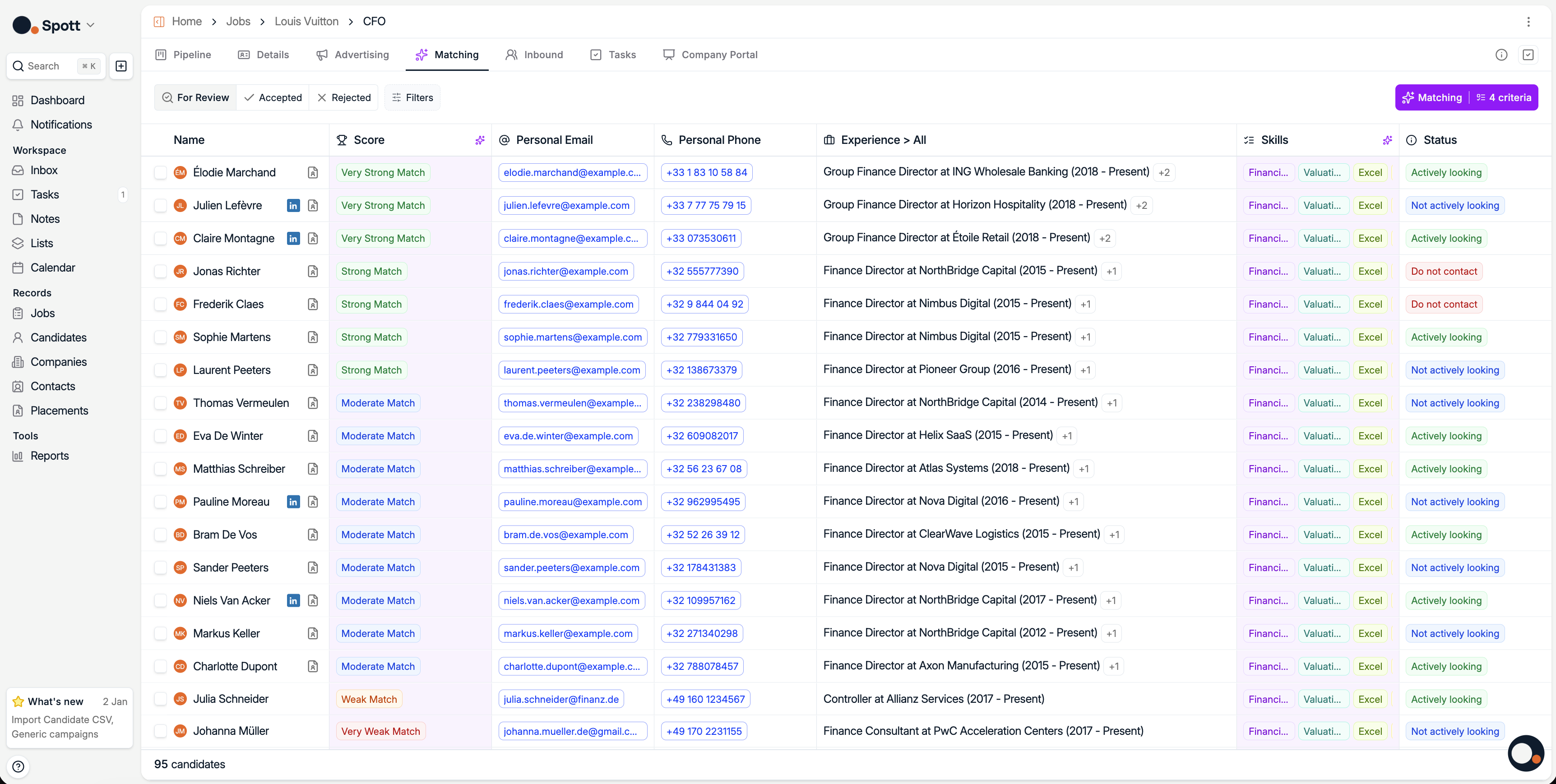
Recruiters get end-to-end insight across candidates, clients, jobs, and activity, with pipeline and funnel views that show how work actually moves. They can see where searches slow down, how long stages take to convert, and which actions drive progress. Instead of managing dashboards, recruiters define the views that matter to them. AI turns data into clarity, while recruiters stay in control of the decisions.
What to look for in next-generation recruiting software
If you’re evaluating new systems, here’s what separates AI-native platforms from legacy tools with AI features bolted on:
- Self-updating data: Profiles should stay current without lots of manual effort. Calls, messages, and notes should attach themselves to the right records automatically.
- Unified context: All channels (email, WhatsApp, calls, meetings) should feed one system. Context shouldn’t live in five different tools.
- Actionable intelligence: The system should surface who to contact and why, not just store data and wait for queries.
- Simplicity at scale: For non-technical recruiters, this means confidence. The system feels intuitive and calm instead of overwhelming. For tech-savvy teams, it means consolidation: one platform instead of ten loosely connected tools.
The real promise of AI in recruitment software
The future of ATS and CRM is not about replacing recruiters.
It’s about removing everything that slows them down.
When software captures context automatically, keeps data fresh, and supports better decisions, recruiters get time back. Time for conversations. Time for relationships. Time for placements.
AI fades into the background. Productivity increases. Output compounds.
That is the real shift underway.
Just as the internet reshaped CRM decades ago, AI-native systems are now redefining what ATS and CRM mean for recruitment firms.
The agencies that embrace this shift early won’t just modernise their tech stack. They’ll change how fast, focused, and scalable their entire business can be.
And in a market where speed decides who wins, that difference matters.

Frequently Asked
An AI-native ATS/CRM is built from the ground up with artificial intelligence as its architectural foundation, not added as a bolt-on feature to a legacy database. Traditional platforms store structured data and require recruiters to manually update candidate records, copy notes between systems, and rebuild context from memory. AI-native systems like Spott continuously interpret conversations across channels, auto-update candidate profiles, and surface actionable intelligence -- turning the ATS from a static database into a system that actually understands recruiting context. The core difference is that legacy tools have a context problem: they store data but lose the meaning behind calls, messages, and interactions.
Standalone AI tools each see only one slice of reality -- a matching tool without conversation context produces shallow results, outreach without timing context feels generic, and analytics without complete data misleads. When agencies layer tools like SourceWhale, Metaview, daXtra, and ChatGPT on top of a legacy ATS, recruiters end up switching tabs endlessly and copying notes between systems. A unified data model feeds every interaction into one system so intelligence compounds over time. Spott's approach captures candidates, jobs, clients, conversations, and decisions in a single platform, eliminating fragmentation and giving AI the full memory it needs to deliver accurate recommendations.
Living candidate profiles automatically stay current by capturing context from calls, messages, and notes without manual data entry. In a legacy ATS, a candidate's profile decays the moment a recruiter stops updating it -- details like salary expectations, relocation openness, or availability changes get lost. With an AI-native platform, transcribed calls and synced messages attach to the correct records automatically, so information like a candidate mentioning they are open to relocating or expecting a child updates their profile in real time. This eliminates what the industry considers the single biggest tax in recruitment: manual data entry and context chasing.
Focus on four key differentiators: self-updating data where profiles stay current from calls, messages, and notes without manual effort; unified context where all channels like email, WhatsApp, and calls feed one system; actionable intelligence where the platform surfaces who to contact and why rather than passively storing records; and simplicity at scale with an intuitive interface for recruiters and platform consolidation for tech teams. Ask vendors to demonstrate these capabilities with your actual data rather than relying on marketing claims. Agencies that adopt AI-native systems early gain a compounding advantage in speed, focus, and scalability.

Outp(l)ace everyone.
You can’t win tomorrow’s placements
with yesterday’s tools.